News / National
Ex-police inspector loses High Court bid for reinstatement
20 May 2026 at 15:29hrs |
740 Views
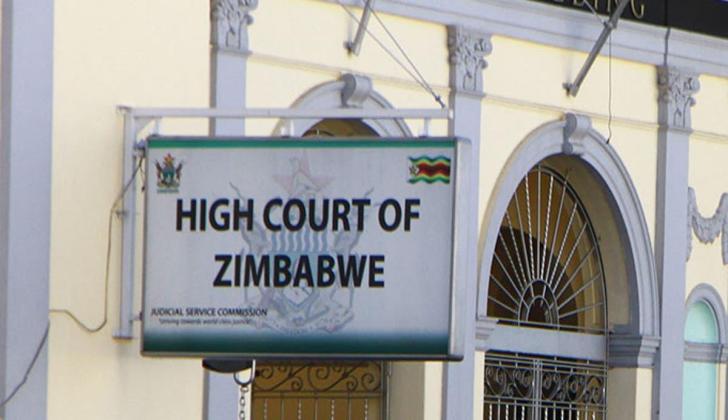
An ex-police inspector who had taken legal action against the President, Home Affairs Minister and the Commissioner-General of Police has had his case dismissed by the High Court after challenging his discharge from the force.
Clarkson Muza approached the court seeking reinstatement into the Zimbabwe Republic Police, together with back pay and full benefits, after being dismissed for allegedly being absent without official leave for 21 days.
However, the High Court ruled that his application was procedurally flawed and could not be entertained.
In his judgment, Justice Jacob Manzunzu said Muza's case amounted to a review application disguised as a declaratory order, and that a litigant cannot pursue both remedies simultaneously.
"The applicant asks for an order for the discharge granted against him in 2017 to be declared void and of no effect… This is clearly not a declaratory order," the judge said.
He further ruled that the application was incompetent and had to be struck off the roll.
Muza had argued that his dismissal was unlawful and that he should be reinstated without loss of salary or benefits, insisting that earlier proceedings did not conclusively establish that he had deserted the police service.
Court records show that Muza was attested into the police force on 14 September 1992 as a constable and rose through the ranks to inspector by April 2013.
At the time of his dismissal, he was stationed at ZRP Nyamapanda, having been transferred there from Bulawayo in 2016.
He was later absent from duty for an extended period, prompting a board of inquiry to be convened in terms of the Police Act, which recommended that he be declared a deserter and discharged as unfit for service.
Following the recommendation, the Commissioner-General and subsequently the President approved his discharge in February 2017.
Muza maintained that he had not deserted the force and pointed to earlier disciplinary processes and a magistrates' court acquittal on related charges.
He also argued that his dismissal was not properly grounded because the trial process had not conclusively proven desertion.
However, the Commissioner-General opposed the application, arguing that it was improperly brought and did not comply with the High Court Rules.
The court agreed, finding that the matter was fundamentally defective and could not proceed on its merits, effectively ending Muza's bid for reinstatement.
Clarkson Muza approached the court seeking reinstatement into the Zimbabwe Republic Police, together with back pay and full benefits, after being dismissed for allegedly being absent without official leave for 21 days.
However, the High Court ruled that his application was procedurally flawed and could not be entertained.
In his judgment, Justice Jacob Manzunzu said Muza's case amounted to a review application disguised as a declaratory order, and that a litigant cannot pursue both remedies simultaneously.
"The applicant asks for an order for the discharge granted against him in 2017 to be declared void and of no effect… This is clearly not a declaratory order," the judge said.
He further ruled that the application was incompetent and had to be struck off the roll.
Muza had argued that his dismissal was unlawful and that he should be reinstated without loss of salary or benefits, insisting that earlier proceedings did not conclusively establish that he had deserted the police service.
Court records show that Muza was attested into the police force on 14 September 1992 as a constable and rose through the ranks to inspector by April 2013.
At the time of his dismissal, he was stationed at ZRP Nyamapanda, having been transferred there from Bulawayo in 2016.
He was later absent from duty for an extended period, prompting a board of inquiry to be convened in terms of the Police Act, which recommended that he be declared a deserter and discharged as unfit for service.
Following the recommendation, the Commissioner-General and subsequently the President approved his discharge in February 2017.
Muza maintained that he had not deserted the force and pointed to earlier disciplinary processes and a magistrates' court acquittal on related charges.
He also argued that his dismissal was not properly grounded because the trial process had not conclusively proven desertion.
However, the Commissioner-General opposed the application, arguing that it was improperly brought and did not comply with the High Court Rules.
The court agreed, finding that the matter was fundamentally defective and could not proceed on its merits, effectively ending Muza's bid for reinstatement.
Source - newsday
Join the discussion
Loading comments…





