News / National
ZHRC report faces legitimacy challenge
16 Apr 2026 at 10:26hrs |
0 Views
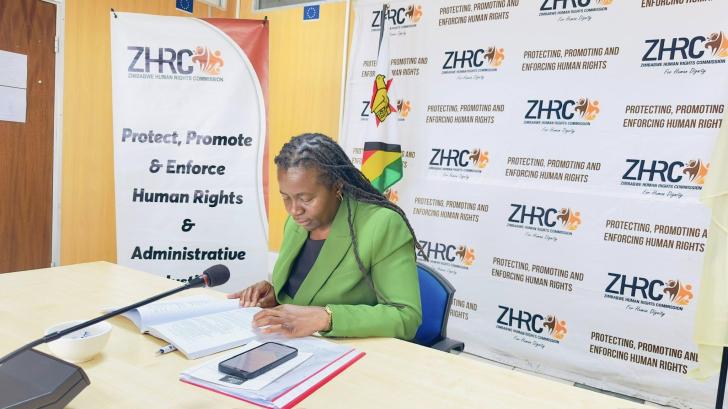
A report on public hearings for Zimbabwe's Constitutional Amendment Number 3 Bill, recently tabled by the Zimbabwe Human Rights Commission (ZHRC), is being challenged as null and void for failing to meet the legally required quorum during its compilation and approval.
The report was produced by former ZHRC chairperson Jessie Majome together with two other commissioners at a time when the commission reportedly had only three active members.
However, the Constitution and enabling legislation governing the ZHRC require a minimum of five commissioners to constitute a quorum for decision-making and the adoption of official reports.
According to the Zimbabwe Human Rights Commission Act, "at any meeting of the Commission, five Commissioners shall form a quorum," and decisions must be made either by consensus or a majority vote at a properly constituted meeting.
The development comes as Emmerson Mnangagwa swore in six new commissioners at State House in Harare, restoring the commission closer to its full complement. The newly appointed commissioners are Dorothy Moyo, Anele Ndebele, Irene Sithole, Tendai Charity Nhenga, Dzikamai Madzimure and Panganai Munkombwe.
Under the Constitution, the ZHRC is meant to comprise nine members, including a chairperson and eight commissioners.
Prior to the latest appointments, the commission had been operating below capacity, raising questions about its ability to make binding decisions, including the adoption of the controversial report.
Meanwhile, Majome has since been reassigned to the Public Service Commission (PSC), a move announced by Chief Secretary to the President and Cabinet Martin Rushwaya.
"In terms of Section 202(1)(b) of the Constitution of Zimbabwe, His Excellency the President… has re-assigned Ms Fungayi Jessie Majome from the position of the Chairperson of the Zimbabwe Human Rights Commission to the position of Commissioner in the Public Service Commission. The re-assignment is with immediate effect," Rushwaya said.
Attorney-General Virginia Mabiza defended the move, stating that the reassignment is constitutionally sound and should not be misconstrued as a removal from office.
She further noted that Majome had previously been reassigned between commissions, including from the Zimbabwe Anti-Corruption Commission (ZACC) to the ZHRC.
The dispute over the report's validity adds another layer of controversy to the ongoing debate surrounding Constitutional Amendment Number 3, with questions now centring not only on its substance but also on the integrity of the consultative process.
The report was produced by former ZHRC chairperson Jessie Majome together with two other commissioners at a time when the commission reportedly had only three active members.
However, the Constitution and enabling legislation governing the ZHRC require a minimum of five commissioners to constitute a quorum for decision-making and the adoption of official reports.
According to the Zimbabwe Human Rights Commission Act, "at any meeting of the Commission, five Commissioners shall form a quorum," and decisions must be made either by consensus or a majority vote at a properly constituted meeting.
The development comes as Emmerson Mnangagwa swore in six new commissioners at State House in Harare, restoring the commission closer to its full complement. The newly appointed commissioners are Dorothy Moyo, Anele Ndebele, Irene Sithole, Tendai Charity Nhenga, Dzikamai Madzimure and Panganai Munkombwe.
Under the Constitution, the ZHRC is meant to comprise nine members, including a chairperson and eight commissioners.
Meanwhile, Majome has since been reassigned to the Public Service Commission (PSC), a move announced by Chief Secretary to the President and Cabinet Martin Rushwaya.
"In terms of Section 202(1)(b) of the Constitution of Zimbabwe, His Excellency the President… has re-assigned Ms Fungayi Jessie Majome from the position of the Chairperson of the Zimbabwe Human Rights Commission to the position of Commissioner in the Public Service Commission. The re-assignment is with immediate effect," Rushwaya said.
Attorney-General Virginia Mabiza defended the move, stating that the reassignment is constitutionally sound and should not be misconstrued as a removal from office.
She further noted that Majome had previously been reassigned between commissions, including from the Zimbabwe Anti-Corruption Commission (ZACC) to the ZHRC.
The dispute over the report's validity adds another layer of controversy to the ongoing debate surrounding Constitutional Amendment Number 3, with questions now centring not only on its substance but also on the integrity of the consultative process.
Source - The Herald
Join the discussion
Loading comments…




