News / National
Mthuli Ncube urges Zimbabwean motorists to cut vehicle use
17 Apr 2026 at 17:38hrs |
0 Views
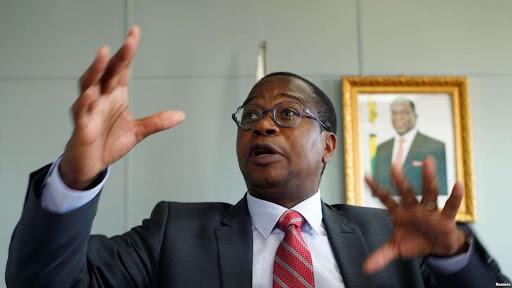
Finance, Economic Development and Investment Promotion Minister Mthuli Ncube has urged motorists to reduce vehicle usage as government moves to manage the impact of rising fuel prices, saying fiscal authorities have "little room to manoeuvre" on pump prices.
His remarks follow a recent increase that pushed diesel to US$2.11 per litre and petrol to US$2.23 per litre, from US$2.05 and US$2.17 respectively, placing additional pressure on motorists and commuters already facing rising transport costs.
The latest price adjustments come at a time when Zimbabwe has an estimated 1.7 million registered vehicles, according to the Zimbabwe National Statistics Agency, underscoring the scale of the impact on households and businesses.
Economists warn that sustained fuel increases are likely to feed into broader inflationary pressures, driving up the cost of goods and services across the economy in the coming months.
Ncube said government had already removed import duty, carbon levy and the reserves build-up levy on diesel, which he said saved about 54 US cents per litre and prevented prices from reaching an estimated US$2.65.
He also pointed to fuel blending initiatives as part of efforts to cushion consumers.
"One which is just behavioural change whereby economic agents, rather than using two cars at a time, by two different family members, maybe they should start using one and start saving on fuel," he said during an online briefing from the IMF/World Bank Spring Meetings.
He added that ethanol blending, currently around 5%, could help reduce petrol prices by about 18 US cents per litre, with potential expansion to 20% under consideration.
"Blending plus behavioural change is what we have been relying on when it comes to petrol," he said.
Pressed on whether government should instead focus on reducing fuel import costs and taxes, Ncube said authorities were constrained by global pricing dynamics.
"At the moment, government has very little room to manoeuvre, but we will make every effort to support citizens," he said.
"We are not saying they should park their cars, but perhaps they could rationalise their movements."
He described Zimbabwe as a "price taker" in global fuel markets, noting that the largest cost component is the free-on-board (FOB) price, which he said accounts for about 67% of diesel pricing and over 50% of petrol pricing.
"We do not control that," he said, adding that transport costs linked to Zimbabwe's landlocked position further contribute to higher pump prices compared to regional peers.
Ncube also said Zimbabwe sources fuel through multiple channels, including the Beira pipeline and road imports via South Africa, after the market was liberalised to improve supply security.
He acknowledged that fuel price increases are contributing to inflation but maintained that it would remain within single-digit levels.
"Up to prices as high as US$2.50 per litre for diesel, we still see inflation remaining within the single-digit zone," he said.
His remarks follow a recent increase that pushed diesel to US$2.11 per litre and petrol to US$2.23 per litre, from US$2.05 and US$2.17 respectively, placing additional pressure on motorists and commuters already facing rising transport costs.
The latest price adjustments come at a time when Zimbabwe has an estimated 1.7 million registered vehicles, according to the Zimbabwe National Statistics Agency, underscoring the scale of the impact on households and businesses.
Economists warn that sustained fuel increases are likely to feed into broader inflationary pressures, driving up the cost of goods and services across the economy in the coming months.
Ncube said government had already removed import duty, carbon levy and the reserves build-up levy on diesel, which he said saved about 54 US cents per litre and prevented prices from reaching an estimated US$2.65.
He also pointed to fuel blending initiatives as part of efforts to cushion consumers.
"One which is just behavioural change whereby economic agents, rather than using two cars at a time, by two different family members, maybe they should start using one and start saving on fuel," he said during an online briefing from the IMF/World Bank Spring Meetings.
He added that ethanol blending, currently around 5%, could help reduce petrol prices by about 18 US cents per litre, with potential expansion to 20% under consideration.
Pressed on whether government should instead focus on reducing fuel import costs and taxes, Ncube said authorities were constrained by global pricing dynamics.
"At the moment, government has very little room to manoeuvre, but we will make every effort to support citizens," he said.
"We are not saying they should park their cars, but perhaps they could rationalise their movements."
He described Zimbabwe as a "price taker" in global fuel markets, noting that the largest cost component is the free-on-board (FOB) price, which he said accounts for about 67% of diesel pricing and over 50% of petrol pricing.
"We do not control that," he said, adding that transport costs linked to Zimbabwe's landlocked position further contribute to higher pump prices compared to regional peers.
Ncube also said Zimbabwe sources fuel through multiple channels, including the Beira pipeline and road imports via South Africa, after the market was liberalised to improve supply security.
He acknowledged that fuel price increases are contributing to inflation but maintained that it would remain within single-digit levels.
"Up to prices as high as US$2.50 per litre for diesel, we still see inflation remaining within the single-digit zone," he said.
Source - newsday
Join the discussion
Loading comments…



