News / National
Telecel Zimbabwe's collapse creates unusual investment opportunities
07 May 2026 at 14:43hrs |
0 Views
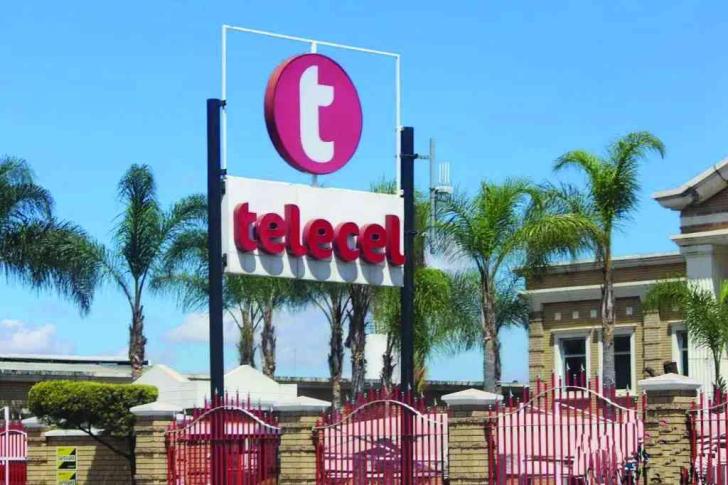
Telecel Zimbabwe, once Zimbabwe's second-largest mobile network operator with nearly two million subscribers and a commanding 15.1 percent market share in 2015, is now operating under voluntary corporate rescue after years of financial decline, underinvestment and subscriber losses.
The company entered corporate rescue following a board resolution passed on October 22, 2025, with Grant Thornton Zimbabwe appointed as the corporate rescue practitioner tasked with stabilising operations, restructuring liabilities and attracting fresh capital.
Potential investors have until June 15 to submit bids for the struggling operator.
The scale of the challenge facing any bidder is considerable. Telecel's disclosed liabilities stand at approximately US$240 million, while the rescue practitioner estimates that at least US$50 million in immediate capital expenditure will be needed simply to restore the network to a commercially competitive position.
By traditional investment metrics, Telecel appears deeply distressed. Yet industry analysts argue that the real value lies not in its current operations, but in something far more strategic — its mobile network operator licence.
Zimbabwe has only three full Public Cellular Telecommunications Network licences. One is held by Econet Wireless Zimbabwe, another by NetOne`, and the third by Telecel. The country has not issued a new full mobile network licence in more than two decades, making entry into the sector through conventional licensing effectively impossible.
Industry observers say this transforms Telecel from a failing telecoms operator into what is effectively a rare gateway into Zimbabwe's telecommunications market.
The operator's collapse has been gradual but severe. In 2015, global telecoms giant VimpelCom exited the business, selling its stake through a transaction financed by state-linked entities including the National Social Security Authority and ZARNet for approximately US$40 million.
However, after the takeover, investment into the network reportedly slowed dramatically. Infrastructure deteriorated, subscribers migrated to competitors, and Telecel steadily lost relevance in the market.
By the second quarter of 2025, active subscriptions had fallen to just 319,548, leaving the operator with less than two percent market share in a sector dominated by Econet.
The network disparity is stark. Telecel reportedly operates 671 2G towers, 435 3G base stations and only 17 LTE sites. In contrast, Econet has deployed around 1,700 4G towers and already offers significant 5G coverage.
Sector data indicates that Telecel's share of national voice traffic fell to just 0.02 percent, while its data traffic share dropped to 0.16 percent.
Yet analysts argue the decline was driven less by rejection of the brand and more by prolonged network deterioration.
"The market never rejected the idea of a third operator," one telecommunications analyst said. "Subscribers left because the network stopped working reliably."
That distinction has become central to the investment thesis surrounding the corporate rescue process.
Zimbabwe's telecommunications market continues to expand, with approximately 16.78 million active subscriptions recorded by the end of 2025 and rising data consumption across operators.
The licence itself, renewed in 2013 for a 20-year period running until 2033, offers any successful investor at least seven years of operational certainty before renewal discussions arise.
Analysts believe this creates an opportunity for a strategic investor capable of recapitalising the network and positioning Telecel as a credible challenger to Econet's dominance, particularly in urban markets where data pricing frustrations continue to grow.
Econet currently controls roughly 73 percent of subscribers and dominates mobile money through EcoCash, which reportedly has around 12 million registered users.
This dominance has created what some industry experts describe as a structurally uncompetitive market, where corporate clients and consumers have limited alternatives.
Potential recovery strategies being discussed include aggressive price-led data bundling, enterprise-focused connectivity products, revival of Telecash as a remittance-focused platform, and fixed wireless broadband offerings targeting underserved peri-urban areas.
Telecommunications experts say pricing alone could rapidly attract subscribers if combined with improved network reliability, particularly given Zimbabwe's long-established dual-SIM culture.
Corporate connectivity is also viewed as a potential growth segment, especially among businesses seeking alternatives to Econet's pricing structure.
However, the risks remain substantial.
Beyond the US$240 million debt burden, investors must navigate unresolved regulatory liabilities, infrastructure decay, governance complications arising from government ownership through ZARNet, and the challenge of rebuilding public trust in the network.
There are also concerns around unpaid obligations to Postal and Telecommunications Regulatory Authority of Zimbabwe, including annual regulatory fees and spectrum charges.
Industry observers say any successful turnaround would require more than capital injection alone. It would also demand experienced telecoms management, regulatory engagement, disciplined infrastructure deployment and a commercially viable long-term product strategy.
The corporate rescue process is therefore increasingly being viewed as a test of whether Zimbabwe can revive a strategically important but distressed national telecoms asset through private-sector investment and operational reform.
The company entered corporate rescue following a board resolution passed on October 22, 2025, with Grant Thornton Zimbabwe appointed as the corporate rescue practitioner tasked with stabilising operations, restructuring liabilities and attracting fresh capital.
Potential investors have until June 15 to submit bids for the struggling operator.
The scale of the challenge facing any bidder is considerable. Telecel's disclosed liabilities stand at approximately US$240 million, while the rescue practitioner estimates that at least US$50 million in immediate capital expenditure will be needed simply to restore the network to a commercially competitive position.
By traditional investment metrics, Telecel appears deeply distressed. Yet industry analysts argue that the real value lies not in its current operations, but in something far more strategic — its mobile network operator licence.
Zimbabwe has only three full Public Cellular Telecommunications Network licences. One is held by Econet Wireless Zimbabwe, another by NetOne`, and the third by Telecel. The country has not issued a new full mobile network licence in more than two decades, making entry into the sector through conventional licensing effectively impossible.
Industry observers say this transforms Telecel from a failing telecoms operator into what is effectively a rare gateway into Zimbabwe's telecommunications market.
The operator's collapse has been gradual but severe. In 2015, global telecoms giant VimpelCom exited the business, selling its stake through a transaction financed by state-linked entities including the National Social Security Authority and ZARNet for approximately US$40 million.
However, after the takeover, investment into the network reportedly slowed dramatically. Infrastructure deteriorated, subscribers migrated to competitors, and Telecel steadily lost relevance in the market.
By the second quarter of 2025, active subscriptions had fallen to just 319,548, leaving the operator with less than two percent market share in a sector dominated by Econet.
The network disparity is stark. Telecel reportedly operates 671 2G towers, 435 3G base stations and only 17 LTE sites. In contrast, Econet has deployed around 1,700 4G towers and already offers significant 5G coverage.
Sector data indicates that Telecel's share of national voice traffic fell to just 0.02 percent, while its data traffic share dropped to 0.16 percent.
Yet analysts argue the decline was driven less by rejection of the brand and more by prolonged network deterioration.
"The market never rejected the idea of a third operator," one telecommunications analyst said. "Subscribers left because the network stopped working reliably."
Zimbabwe's telecommunications market continues to expand, with approximately 16.78 million active subscriptions recorded by the end of 2025 and rising data consumption across operators.
The licence itself, renewed in 2013 for a 20-year period running until 2033, offers any successful investor at least seven years of operational certainty before renewal discussions arise.
Analysts believe this creates an opportunity for a strategic investor capable of recapitalising the network and positioning Telecel as a credible challenger to Econet's dominance, particularly in urban markets where data pricing frustrations continue to grow.
Econet currently controls roughly 73 percent of subscribers and dominates mobile money through EcoCash, which reportedly has around 12 million registered users.
This dominance has created what some industry experts describe as a structurally uncompetitive market, where corporate clients and consumers have limited alternatives.
Potential recovery strategies being discussed include aggressive price-led data bundling, enterprise-focused connectivity products, revival of Telecash as a remittance-focused platform, and fixed wireless broadband offerings targeting underserved peri-urban areas.
Telecommunications experts say pricing alone could rapidly attract subscribers if combined with improved network reliability, particularly given Zimbabwe's long-established dual-SIM culture.
Corporate connectivity is also viewed as a potential growth segment, especially among businesses seeking alternatives to Econet's pricing structure.
However, the risks remain substantial.
Beyond the US$240 million debt burden, investors must navigate unresolved regulatory liabilities, infrastructure decay, governance complications arising from government ownership through ZARNet, and the challenge of rebuilding public trust in the network.
There are also concerns around unpaid obligations to Postal and Telecommunications Regulatory Authority of Zimbabwe, including annual regulatory fees and spectrum charges.
Industry observers say any successful turnaround would require more than capital injection alone. It would also demand experienced telecoms management, regulatory engagement, disciplined infrastructure deployment and a commercially viable long-term product strategy.
The corporate rescue process is therefore increasingly being viewed as a test of whether Zimbabwe can revive a strategically important but distressed national telecoms asset through private-sector investment and operational reform.
Source - online
Join the discussion
Loading comments…





