News / National
Zimbabwe's significant geological feature on earth
07 May 2026 at 15:45hrs |
0 Views
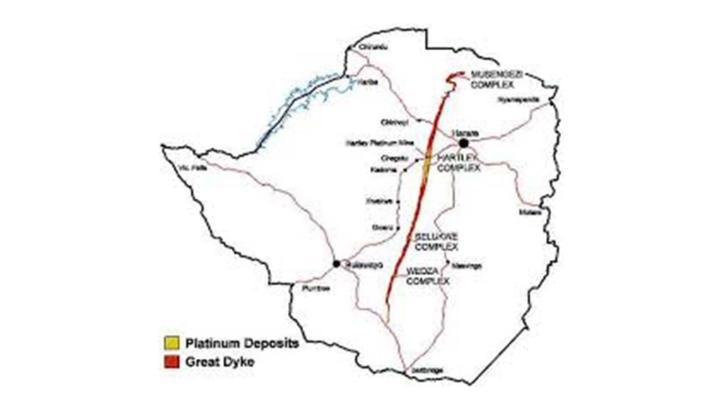
The 2.5-billion-year-old Great Dyke, a vast linear geological formation stretching roughly 550 kilometres through Zimbabwe from north to south, has been described as one of the most significant igneous structures on Earth, according to observations published by NASA's Earth Observatory.
Recent images captured from space by astronauts show the formation as a distinct, continuous ridge cutting across Zimbabwe's landscape. NASA notes that the structure is visible from orbit due to its length, elevation and contrasting geological textures.
Geologists describe the Great Dyke as a narrow chain of ridges and hills, varying between 3.2 km and 13 km in width, with elevations rising up to 1,500 feet above the surrounding plateau. The formation is considered a classic example of an igneous intrusion, formed when molten rock from the Earth's mantle slowly forced its way through crustal fractures before cooling over billions of years.
NASA scientists say the structure formed approximately 2.5 billion years ago, during a period of intense geological activity on early Earth. The result is one of the longest and most continuous layered intrusions known globally, preserving a rare record of the planet's internal evolution.
Beyond its scientific importance, the Great Dyke is widely recognised for its extraordinary mineral wealth. It hosts significant deposits of platinum group metals, chrome, nickel, gold, copper, iron, titanium, vanadium and other strategic resources. Some analysts describe it as one of the world's richest mineral corridors concentrated within a single geological feature.
The dyke's chromite deposits are particularly important for stainless steel production due to their high chromium content, while its platinum reserves rank among the largest globally.
Mining operations along the Great Dyke have long formed the backbone of Zimbabwe's extractive sector, with major producers operating in the region, including Unki Mines, Mimosa and Zimasco. These operations have contributed significantly to export earnings and employment, particularly in platinum and chrome mining.
Experts say the concentration of diverse minerals in one continuous structure is exceptionally rare, making the Great Dyke both a geological landmark and a strategic economic asset. Its mineral endowment is believed to originate from deep-Earth processes that brought valuable elements closer to the surface over geological time.
Modern satellite imaging has allowed scientists to re-examine the formation in greater detail, revealing new insights into its structure and composition. Researchers say ongoing observations continue to deepen understanding of how such large-scale mineral systems formed.
Often referred to by geologists as Zimbabwe's “spinal cord,” the Great Dyke is also viewed as a major investment magnet, attracting mining interest from countries including China, Russia, India and South Africa.
Analysts say its combination of scientific significance and mineral abundance makes it one of the most important geological formations on the African continent, and a key pillar of Zimbabwe's mining-driven economy.
Recent images captured from space by astronauts show the formation as a distinct, continuous ridge cutting across Zimbabwe's landscape. NASA notes that the structure is visible from orbit due to its length, elevation and contrasting geological textures.
Geologists describe the Great Dyke as a narrow chain of ridges and hills, varying between 3.2 km and 13 km in width, with elevations rising up to 1,500 feet above the surrounding plateau. The formation is considered a classic example of an igneous intrusion, formed when molten rock from the Earth's mantle slowly forced its way through crustal fractures before cooling over billions of years.
NASA scientists say the structure formed approximately 2.5 billion years ago, during a period of intense geological activity on early Earth. The result is one of the longest and most continuous layered intrusions known globally, preserving a rare record of the planet's internal evolution.
Beyond its scientific importance, the Great Dyke is widely recognised for its extraordinary mineral wealth. It hosts significant deposits of platinum group metals, chrome, nickel, gold, copper, iron, titanium, vanadium and other strategic resources. Some analysts describe it as one of the world's richest mineral corridors concentrated within a single geological feature.
The dyke's chromite deposits are particularly important for stainless steel production due to their high chromium content, while its platinum reserves rank among the largest globally.
Mining operations along the Great Dyke have long formed the backbone of Zimbabwe's extractive sector, with major producers operating in the region, including Unki Mines, Mimosa and Zimasco. These operations have contributed significantly to export earnings and employment, particularly in platinum and chrome mining.
Experts say the concentration of diverse minerals in one continuous structure is exceptionally rare, making the Great Dyke both a geological landmark and a strategic economic asset. Its mineral endowment is believed to originate from deep-Earth processes that brought valuable elements closer to the surface over geological time.
Modern satellite imaging has allowed scientists to re-examine the formation in greater detail, revealing new insights into its structure and composition. Researchers say ongoing observations continue to deepen understanding of how such large-scale mineral systems formed.
Often referred to by geologists as Zimbabwe's “spinal cord,” the Great Dyke is also viewed as a major investment magnet, attracting mining interest from countries including China, Russia, India and South Africa.
Analysts say its combination of scientific significance and mineral abundance makes it one of the most important geological formations on the African continent, and a key pillar of Zimbabwe's mining-driven economy.
Source - the herald
Join the discussion
Loading comments…





