News / National
Mthuli eyes Asian lenders over debt burden
28 Jun 2026 at 21:02hrs |
0 Views
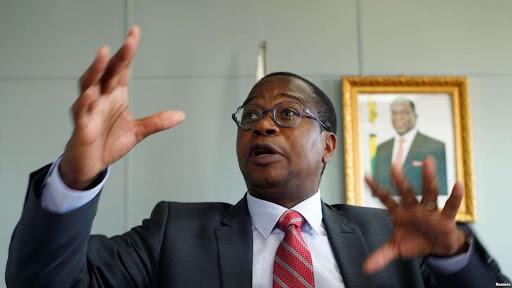
ZIMBABWE is stepping up efforts to secure funding from major Asian-led multilateral financial institutions as it seeks to overcome a US$23 billion debt overhang that continues to limit access to concessional financing from traditional Western lenders.
Finance, Economic Development and Investment Promotion Minister Mthuli Ncube said the Government was pursuing membership of the BRICS New Development Bank (NDB) and the Asian Infrastructure Investment Bank (AIIB) to diversify funding sources and support the country's long-term economic growth agenda.
Speaking to journalists in China, where he is leading Zimbabwe's delegation to the 17th Annual Meeting of the New Champions of the World Economic Forum, Ncube said joining the two institutions would create additional financing opportunities for both Government and the private sector.
"To open avenues to finance our growth going forward, it's important for us to join various financial institutions," Ncube said.
"We have applied to join the BRICS Bank and that membership application is being considered and processed. I also visited the Asian Infrastructure Investment Bank on this occasion, again with a view to getting Zimbabwe to join this bank.
"We have expressed interest in writing, and hopefully we can then engage AIIB to process Zimbabwe's application going forward."
Zimbabwe's public debt, estimated at about US$23 billion, is equivalent to roughly half of the country's gross domestic product and remains one of the biggest obstacles to economic recovery.
The debt burden has largely shut Zimbabwe out of concessional international capital markets because of unresolved arrears owed to institutions including the World Bank and the African Development Bank (AfDB).
Government has been pursuing an arrears clearance and debt resolution programme while simultaneously seeking alternative sources of long-term capital to finance infrastructure development and economic expansion.
Ncube dismissed suggestions that Zimbabwe was pursuing Asian lenders because they imposed fewer conditions than traditional multilateral institutions.
"In fact, they are restrictive. Companies cannot access funding from these banks if the sovereign, which is the Government, is not a member in the first place," he said.
"So, we are seeking membership so that we and our companies in Zimbabwe could borrow going forward."
He emphasised that both the BRICS New Development Bank and the AIIB are multilateral institutions owned by their member countries rather than by individual governments.
"The BRICS Bank is not solely owned by China. It's owned by BRICS countries. And also, if we join as a member, Zimbabwe will also be one of the owners. We will be one of the shareholders," Ncube said.
He noted that Zimbabwe already holds shareholding positions in several international financial institutions.
"Just like the World Bank doesn't just belong to the US because it's based there, we are also shareholders. It also belongs to Zimbabwe," he said.
"The IMF belongs to Zimbabwe. The African Finance Corporation belongs to Zimbabwe. Afreximbank also belongs to Zimbabwe, as does the African Development Bank."
The BRICS New Development Bank was established by Brazil, Russia, India, China and South Africa to finance infrastructure and sustainable development projects in emerging economies.
The AIIB, headquartered in Beijing, finances infrastructure and connectivity projects across the world and is owned by its member states.
Ncube linked the search for new financing sources to Zimbabwe's latest economic performance, citing recently released data from the Zimbabwe National Statistics Agency (ZimStat).
"As you know, ZimStat published this week that Zimbabwe's growth rate for last year, 2025, is now 8.3 percent. This is the latest and final figure," he said.
"This is steady growth, the highest in sub-Saharan Africa, and it is a commendable rate of growth."
According to the minister, agriculture expanded by 11.1 percent during 2025, manufacturing grew by 16.8 percent, mining by 16 percent, wholesale and retail trade by 11 percent, while the financial and insurance sector recorded growth of 6.1 percent.
Government is targeting average annual economic growth of around five percent through to 2030 as it pursues its goal of attaining upper-middle-income economy status.
However, analysts say resolving Zimbabwe's debt challenges and restoring access to affordable international financing will remain critical to sustaining long-term economic growth and funding major infrastructure development projects.
Finance, Economic Development and Investment Promotion Minister Mthuli Ncube said the Government was pursuing membership of the BRICS New Development Bank (NDB) and the Asian Infrastructure Investment Bank (AIIB) to diversify funding sources and support the country's long-term economic growth agenda.
Speaking to journalists in China, where he is leading Zimbabwe's delegation to the 17th Annual Meeting of the New Champions of the World Economic Forum, Ncube said joining the two institutions would create additional financing opportunities for both Government and the private sector.
"To open avenues to finance our growth going forward, it's important for us to join various financial institutions," Ncube said.
"We have applied to join the BRICS Bank and that membership application is being considered and processed. I also visited the Asian Infrastructure Investment Bank on this occasion, again with a view to getting Zimbabwe to join this bank.
"We have expressed interest in writing, and hopefully we can then engage AIIB to process Zimbabwe's application going forward."
Zimbabwe's public debt, estimated at about US$23 billion, is equivalent to roughly half of the country's gross domestic product and remains one of the biggest obstacles to economic recovery.
The debt burden has largely shut Zimbabwe out of concessional international capital markets because of unresolved arrears owed to institutions including the World Bank and the African Development Bank (AfDB).
Government has been pursuing an arrears clearance and debt resolution programme while simultaneously seeking alternative sources of long-term capital to finance infrastructure development and economic expansion.
Ncube dismissed suggestions that Zimbabwe was pursuing Asian lenders because they imposed fewer conditions than traditional multilateral institutions.
"In fact, they are restrictive. Companies cannot access funding from these banks if the sovereign, which is the Government, is not a member in the first place," he said.
"So, we are seeking membership so that we and our companies in Zimbabwe could borrow going forward."
"The BRICS Bank is not solely owned by China. It's owned by BRICS countries. And also, if we join as a member, Zimbabwe will also be one of the owners. We will be one of the shareholders," Ncube said.
He noted that Zimbabwe already holds shareholding positions in several international financial institutions.
"Just like the World Bank doesn't just belong to the US because it's based there, we are also shareholders. It also belongs to Zimbabwe," he said.
"The IMF belongs to Zimbabwe. The African Finance Corporation belongs to Zimbabwe. Afreximbank also belongs to Zimbabwe, as does the African Development Bank."
The BRICS New Development Bank was established by Brazil, Russia, India, China and South Africa to finance infrastructure and sustainable development projects in emerging economies.
The AIIB, headquartered in Beijing, finances infrastructure and connectivity projects across the world and is owned by its member states.
Ncube linked the search for new financing sources to Zimbabwe's latest economic performance, citing recently released data from the Zimbabwe National Statistics Agency (ZimStat).
"As you know, ZimStat published this week that Zimbabwe's growth rate for last year, 2025, is now 8.3 percent. This is the latest and final figure," he said.
"This is steady growth, the highest in sub-Saharan Africa, and it is a commendable rate of growth."
According to the minister, agriculture expanded by 11.1 percent during 2025, manufacturing grew by 16.8 percent, mining by 16 percent, wholesale and retail trade by 11 percent, while the financial and insurance sector recorded growth of 6.1 percent.
Government is targeting average annual economic growth of around five percent through to 2030 as it pursues its goal of attaining upper-middle-income economy status.
However, analysts say resolving Zimbabwe's debt challenges and restoring access to affordable international financing will remain critical to sustaining long-term economic growth and funding major infrastructure development projects.
Source - The Standard
Join the discussion
Loading comments…





