Opinion / Columnist
Why African tyrants' ideological bankruptcy prioritizes personal enrichment over citizens’ suffering
26 Apr 2026 at 22:34hrs |
792 Views
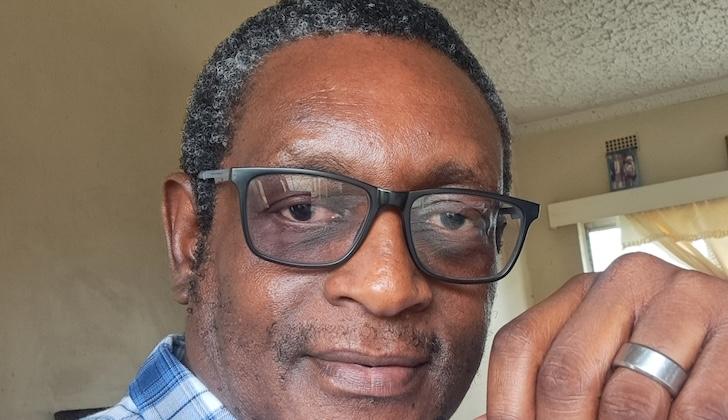
A person with an empty head and no solutions thinks of nothing but theft.
Someone today sent me a message asking what made African dictators appear so fundamentally different from European dictators.
If you value my social justice advocacy and writing, please consider a financial contribution to keep it going. Contact me on WhatsApp: +263 715 667 700 or Email: mbofana.tendairuben73@gmail.com
The question was a sharp one.
Why was it that European dictators, though brutally repressive, seemed inclined to develop their countries into global powerhouses and uplift their people?
Why, in contrast, are our own dictators interested only in looting national resources for personal enrichment while impoverishing the citizenry?
He cited the examples of Adolf Hitler and Josef Stalin, and requested my insights.
It is a question that cuts to the very heart of the African crisis.
It forces us to ask why the European tyrant often left behind a legacy of industrial steel and concrete, however blood-soaked, while the African tyrant so often leaves behind nothing but the hollowed-out carcass of a failed state and a people reduced to destitution.
To understand this paradox, one must look at the dark efficiency of 20th-century European totalitarianism.
When we examine the regimes of Adolf Hitler or Josef Stalin, we are looking at men whose names are synonymous with the worst atrocities in human history.
Yet, there is an uncomfortable historical reality to confront: they viewed their nations as extensions of a grand, albeit horrific, ideological vision.
Hitler’s Germany, emerging from the ruin of the First World War and the humiliation of hyperinflation, was transformed through a staggering program of public works and industrial modernization.
The rapid construction of the massive Autobahn network, the development of the ‘People’s Car,’ and the total elimination of mass unemployment were only the surface of a deeper transformation.
From pioneering rocketry and jet propulsion to establishing the world’s first sophisticated national television and radio networks, these were not acts of altruism.
They were the logistical and technological foundations laid by a leader who intended to dominate the globe.
Similarly, Stalin took a Russia that was little more than an agrarian backwater and, through the sheer, murderous force of his Five-Year Plans, hammered it into a nuclear-armed industrial superpower.
Millions were sacrificed to the machinery of the state, but the state itself emerged as a titan of science, industry, and military might.
These men were mass murderers, but they were nation-builders who saw a productive populace as the essential fuel for their ideological fire.
Contrast this with the sickening reality of most African states under repressive leadership, with Zimbabwe serving as a heartbreaking modern example.
In our context, the repression is just as absolute and the fear just as thick, but where is the industrial leap?
Where is the infrastructure that serves the next generation?
In Zimbabwe, once the proud breadbasket of the region, we see the tragic spectacle of a leadership that has overseen the total collapse of its own health and education delivery systems, the decimation of a once-vibrant manufacturing sector, and the flight of millions of its most talented citizens.
While the European dictator used the people to build a powerful state, the African dictator uses the state to devour the people.
Here, the national treasury is not a fund for development; it is a private spoils system.
The acquisition of offshore mansions, luxury fleets, and private jets for a tiny elite takes precedence over the basic functioning of a public hospital or the maintenance of a power grid.
Our leaders seem to view the country not as a home to be built, but as a resource to be mined until there is nothing left but dust.
The reasons for this divergence are both structural and psychological.
Firstly, we must look at the nature of the “vision.”
Hitler and Stalin were ideological totalitarians; they believed in a “Thousand-Year Reich” or a “Global Proletarian Revolution.”
To these men, the state was a vessel for immortality, a machine designed to outlive them and reshape the course of human history.
Because they were obsessed with their place in the historical record, personal wealth was a secondary concern—a petty distraction compared to the absolute success of the cause.
They didn’t want to own the world; they wanted to rule it and change it forever.
In many African contexts, however, ideology is merely a thin mask—a collection of tired revolutionary slogans used to disguise what is essentially a kleptocracy.
There is no grand design for the future, only a desperate grasp on the present.
When power is sought not to implement a transformative vision, but to secure a decadent lifestyle, the result is a predatory state that consumes its own vital organs to keep a small elite in luxury.
The leader in this system does not see himself as the architect of a future empire or a pioneer of a new social order.
Instead, he views himself as the temporary occupant of a palace—a squatter in high office who must extract as much wealth as possible, as quickly as possible, before the inevitable coup, election loss, or total state collapse.
For him, the country is not a legacy to be built, but a business to be liquidated.
Furthermore, we cannot ignore the “Extractive Legacy” of the colonial era.
Many of our post-colonial states inherited administrative systems that were never designed for the development of the citizenry, but for the efficient extraction of raw materials for a distant metropole.
When local strongmen took the reins, they often simply replaced the foreign colonizer with a domestic one, keeping the extractive pipelines running but rerouting the proceeds into their own Swiss or Dubai bank accounts.
In this model, a healthy, wealthy, and educated population is actually a threat to the regime.
A prosperous middle class demands accountability, transparency, and rights; an impoverished, starving populace is far easier to control, as their entire existence is consumed by the desperate struggle for the next meal.
There is also the “Exit Problem.”
For ideological totalitarians like Hitler or Stalin, there was no “after.”
They had tied their entire existence to the fate of the state; if the state fell, they fell.
Consequently, they had every incentive to pour every ounce of national resource into building a powerful, self-sustaining industrial and military machine.
They weren’t looking for a retirement plan; they were looking for historical immortality.
But for the African dictator, losing power often means losing everything—liberty, wealth, or life itself.
This creates a survivalist mentality where the leader externalizes the nation’s wealth as a form of “insurance.”
They destroy the economy because they do not intend to live in its ruins once the music stops.
They are not building a legacy; they are looting a hotel room.
Ultimately, the difference lies in the definition of power.
For the “nation-building” tyrant, power is the ability to shape the world in one’s image.
For the “looting” tyrant, power is the ability to consume without consequence.
Until we move away from a politics of consumption and toward a politics of genuine national vision, our continent will continue to be haunted by leaders who would rather be the kings of a wasteland than the servants of a rising sun.
The tragedy of the African dictator is that he kills the very golden goose he claims to lead, leaving behind nothing but the hollow shell of a nation and a people whose only “benefit” is the privilege of surviving another day under the shadow of his greed.
- Tendai Ruben Mbofana is a social justice advocate and writer. To directly receive his articles please join his WhatsApp Channel on: https://whatsapp.com/channel/0029VaqprWCIyPtRnKpkHe08
Someone today sent me a message asking what made African dictators appear so fundamentally different from European dictators.
If you value my social justice advocacy and writing, please consider a financial contribution to keep it going. Contact me on WhatsApp: +263 715 667 700 or Email: mbofana.tendairuben73@gmail.com
The question was a sharp one.
Why was it that European dictators, though brutally repressive, seemed inclined to develop their countries into global powerhouses and uplift their people?
Why, in contrast, are our own dictators interested only in looting national resources for personal enrichment while impoverishing the citizenry?
He cited the examples of Adolf Hitler and Josef Stalin, and requested my insights.
It is a question that cuts to the very heart of the African crisis.
It forces us to ask why the European tyrant often left behind a legacy of industrial steel and concrete, however blood-soaked, while the African tyrant so often leaves behind nothing but the hollowed-out carcass of a failed state and a people reduced to destitution.
To understand this paradox, one must look at the dark efficiency of 20th-century European totalitarianism.
When we examine the regimes of Adolf Hitler or Josef Stalin, we are looking at men whose names are synonymous with the worst atrocities in human history.
Yet, there is an uncomfortable historical reality to confront: they viewed their nations as extensions of a grand, albeit horrific, ideological vision.
Hitler’s Germany, emerging from the ruin of the First World War and the humiliation of hyperinflation, was transformed through a staggering program of public works and industrial modernization.
The rapid construction of the massive Autobahn network, the development of the ‘People’s Car,’ and the total elimination of mass unemployment were only the surface of a deeper transformation.
From pioneering rocketry and jet propulsion to establishing the world’s first sophisticated national television and radio networks, these were not acts of altruism.
They were the logistical and technological foundations laid by a leader who intended to dominate the globe.
Similarly, Stalin took a Russia that was little more than an agrarian backwater and, through the sheer, murderous force of his Five-Year Plans, hammered it into a nuclear-armed industrial superpower.
Millions were sacrificed to the machinery of the state, but the state itself emerged as a titan of science, industry, and military might.
These men were mass murderers, but they were nation-builders who saw a productive populace as the essential fuel for their ideological fire.
Contrast this with the sickening reality of most African states under repressive leadership, with Zimbabwe serving as a heartbreaking modern example.
In our context, the repression is just as absolute and the fear just as thick, but where is the industrial leap?
Where is the infrastructure that serves the next generation?
In Zimbabwe, once the proud breadbasket of the region, we see the tragic spectacle of a leadership that has overseen the total collapse of its own health and education delivery systems, the decimation of a once-vibrant manufacturing sector, and the flight of millions of its most talented citizens.
While the European dictator used the people to build a powerful state, the African dictator uses the state to devour the people.
Here, the national treasury is not a fund for development; it is a private spoils system.
The acquisition of offshore mansions, luxury fleets, and private jets for a tiny elite takes precedence over the basic functioning of a public hospital or the maintenance of a power grid.
Our leaders seem to view the country not as a home to be built, but as a resource to be mined until there is nothing left but dust.
The reasons for this divergence are both structural and psychological.
Hitler and Stalin were ideological totalitarians; they believed in a “Thousand-Year Reich” or a “Global Proletarian Revolution.”
To these men, the state was a vessel for immortality, a machine designed to outlive them and reshape the course of human history.
Because they were obsessed with their place in the historical record, personal wealth was a secondary concern—a petty distraction compared to the absolute success of the cause.
They didn’t want to own the world; they wanted to rule it and change it forever.
In many African contexts, however, ideology is merely a thin mask—a collection of tired revolutionary slogans used to disguise what is essentially a kleptocracy.
There is no grand design for the future, only a desperate grasp on the present.
When power is sought not to implement a transformative vision, but to secure a decadent lifestyle, the result is a predatory state that consumes its own vital organs to keep a small elite in luxury.
The leader in this system does not see himself as the architect of a future empire or a pioneer of a new social order.
Instead, he views himself as the temporary occupant of a palace—a squatter in high office who must extract as much wealth as possible, as quickly as possible, before the inevitable coup, election loss, or total state collapse.
For him, the country is not a legacy to be built, but a business to be liquidated.
Furthermore, we cannot ignore the “Extractive Legacy” of the colonial era.
Many of our post-colonial states inherited administrative systems that were never designed for the development of the citizenry, but for the efficient extraction of raw materials for a distant metropole.
When local strongmen took the reins, they often simply replaced the foreign colonizer with a domestic one, keeping the extractive pipelines running but rerouting the proceeds into their own Swiss or Dubai bank accounts.
In this model, a healthy, wealthy, and educated population is actually a threat to the regime.
A prosperous middle class demands accountability, transparency, and rights; an impoverished, starving populace is far easier to control, as their entire existence is consumed by the desperate struggle for the next meal.
There is also the “Exit Problem.”
For ideological totalitarians like Hitler or Stalin, there was no “after.”
They had tied their entire existence to the fate of the state; if the state fell, they fell.
Consequently, they had every incentive to pour every ounce of national resource into building a powerful, self-sustaining industrial and military machine.
They weren’t looking for a retirement plan; they were looking for historical immortality.
But for the African dictator, losing power often means losing everything—liberty, wealth, or life itself.
This creates a survivalist mentality where the leader externalizes the nation’s wealth as a form of “insurance.”
They destroy the economy because they do not intend to live in its ruins once the music stops.
They are not building a legacy; they are looting a hotel room.
Ultimately, the difference lies in the definition of power.
For the “nation-building” tyrant, power is the ability to shape the world in one’s image.
For the “looting” tyrant, power is the ability to consume without consequence.
Until we move away from a politics of consumption and toward a politics of genuine national vision, our continent will continue to be haunted by leaders who would rather be the kings of a wasteland than the servants of a rising sun.
The tragedy of the African dictator is that he kills the very golden goose he claims to lead, leaving behind nothing but the hollow shell of a nation and a people whose only “benefit” is the privilege of surviving another day under the shadow of his greed.
- Tendai Ruben Mbofana is a social justice advocate and writer. To directly receive his articles please join his WhatsApp Channel on: https://whatsapp.com/channel/0029VaqprWCIyPtRnKpkHe08
Source - Tendai Ruben Mbofana
All articles and letters published on Bulawayo24 have been independently written by members of Bulawayo24's community. The views of users published on Bulawayo24 are therefore their own and do not necessarily represent the views of Bulawayo24. Bulawayo24 editors also reserve the right to edit or delete any and all comments received.
Join the discussion
Loading comments…





