News / National
Zimbabwe gas discovery could power 500MW plant for 1,000 years
25 Jun 2026 at 20:14hrs |
0 Views
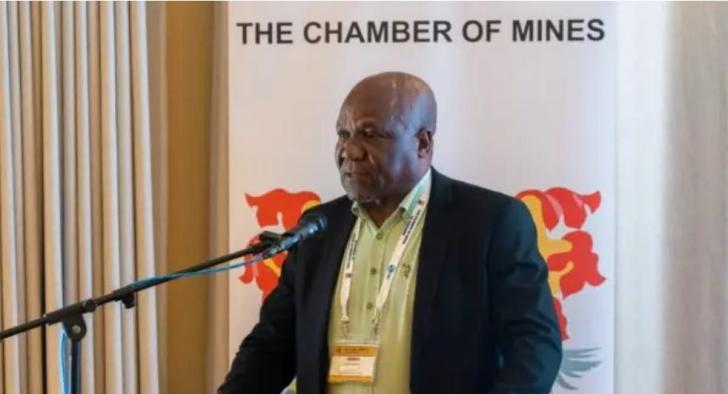
Zimbabwe's proven natural gas resources in Mzarabani could generate enough electricity to power a 500-megawatt power station for up to 1,000 years, highlighting the enormous potential of the Cabora Bassa Basin, according to Geo Associates founder and managing director Paul Chimbodza.
Speaking at the Chamber of Mines Annual Conference in Victoria Falls, Chimbodza said exploration activities have so far covered only a tiny portion of the vast licence area, suggesting that the basin's full resource potential remains largely unexplored.
"If you just suppose that with a licence area that is 360,000 hectares, what it says is we have barely scratched the surface," Chimbodza said.
"The two wells, Mukuyu 1 and Mukuyu 2, seven kilometres apart, in a licence area as big as this room, we've just scratched the corner."
Independent resource estimates place the broader Mukuyu prospect at up to 20 trillion cubic feet (Tcf) of natural gas and 845 million barrels of conventional gas condensate, equivalent to approximately 4.3 billion barrels of oil equivalent on a gross mean unrisked basis.
According to Chimbodza, one trillion cubic feet of natural gas can generate enough electricity to operate a 500-megawatt power station for about 50 years. On that basis, a resource of 20 trillion cubic feet could theoretically sustain such a plant for approximately 1,000 years.
The wider Cabora Bassa Basin is estimated to contain approximately 1.38 billion barrels of oil and condensate, with an estimated in-situ value of around US$90 billion at current market prices.
Industry consultancy Wood Mackenzie ranked the Mukuyu discovery as sub-Saharan Africa's second-largest petroleum discovery of 2023.
The Mzarabani project is operated under Geo Associates, with Australian-listed Invictus Energy holding an 80% interest and One Gas Resources owning the remaining 20%.
The exploration licence, initially covering 100,000 hectares, has since been expanded to 360,000 hectares through collaboration with the Mutapa Investment Fund.
Chimbodza said the project has benefited from historical exploration work undertaken by Mobil several decades ago.
According to him, Geo Associates reprocessed Mobil's seismic data using modern computing power and advanced interpretation techniques, revealing geological features that earlier technology could not identify.
"That's all we did with the Mobil data," he said.
"We subjected it to new techniques, new resolution, and we started picking up what Mobil couldn't pick up then."
He said the company has already identified more than a dozen drill-ready exploration targets across the licence area.
"In our case, we are spoiled for choice on where to drill," Chimbodza said.
He explained that although Mobil explored the basin roughly 40 years ago, the project was never commercialised because there was little market demand for natural gas at the time.
"If you go back 40 years ago, the gas market was non-existent," he said.
"Even in our homes 40 years ago, no one was using cooking gas. Fast forward to today, there is a huge market, not only in Zimbabwe but in the region."
The project reached a significant milestone in May 2026 when Invictus Energy, through Geo Associates, signed a Petroleum Production Sharing Agreement (PPSA) with the Government of Zimbabwe, establishing the legal and fiscal framework for petroleum exploration, production and revenue sharing.
Finance, Economic Development and Investment Promotion Minister Professor Mthuli Ncube has previously described the Cabora Bassa project as a strategic national undertaking with the potential to transform Zimbabwe's economy through enhanced energy security, industrialisation and job creation.
Under the agreement, the government will receive its share of production either in cash or petroleum products through a sliding-scale mechanism linked to project profitability.
Looking ahead, Invictus Energy plans to begin appraisal work at the Mukuyu Gas Field later this year to determine the full extent and quality of the reservoir.
The company is also preparing to drill the Musuma-1 exploration well during the second half of 2026, targeting an estimated 1.2 trillion cubic feet of gas and 73 million barrels of condensate.
A pilot gas-to-power project is already under development, with an initial generation capacity of 12 megawatts that could later be expanded to 50MW to supply electricity to Dallaglio Investments' Eureka Gold Mine.
The project has also confirmed the presence of commercially valuable helium, providing an additional potential revenue stream alongside natural gas and condensate production.
Summing up the project's potential, Chimbodza said the exploration programme had only begun to reveal the scale of the basin's resources.
"We've just scratched the corner," he said.
Speaking at the Chamber of Mines Annual Conference in Victoria Falls, Chimbodza said exploration activities have so far covered only a tiny portion of the vast licence area, suggesting that the basin's full resource potential remains largely unexplored.
"If you just suppose that with a licence area that is 360,000 hectares, what it says is we have barely scratched the surface," Chimbodza said.
"The two wells, Mukuyu 1 and Mukuyu 2, seven kilometres apart, in a licence area as big as this room, we've just scratched the corner."
Independent resource estimates place the broader Mukuyu prospect at up to 20 trillion cubic feet (Tcf) of natural gas and 845 million barrels of conventional gas condensate, equivalent to approximately 4.3 billion barrels of oil equivalent on a gross mean unrisked basis.
According to Chimbodza, one trillion cubic feet of natural gas can generate enough electricity to operate a 500-megawatt power station for about 50 years. On that basis, a resource of 20 trillion cubic feet could theoretically sustain such a plant for approximately 1,000 years.
The wider Cabora Bassa Basin is estimated to contain approximately 1.38 billion barrels of oil and condensate, with an estimated in-situ value of around US$90 billion at current market prices.
Industry consultancy Wood Mackenzie ranked the Mukuyu discovery as sub-Saharan Africa's second-largest petroleum discovery of 2023.
The Mzarabani project is operated under Geo Associates, with Australian-listed Invictus Energy holding an 80% interest and One Gas Resources owning the remaining 20%.
The exploration licence, initially covering 100,000 hectares, has since been expanded to 360,000 hectares through collaboration with the Mutapa Investment Fund.
Chimbodza said the project has benefited from historical exploration work undertaken by Mobil several decades ago.
According to him, Geo Associates reprocessed Mobil's seismic data using modern computing power and advanced interpretation techniques, revealing geological features that earlier technology could not identify.
"That's all we did with the Mobil data," he said.
"We subjected it to new techniques, new resolution, and we started picking up what Mobil couldn't pick up then."
He said the company has already identified more than a dozen drill-ready exploration targets across the licence area.
"In our case, we are spoiled for choice on where to drill," Chimbodza said.
He explained that although Mobil explored the basin roughly 40 years ago, the project was never commercialised because there was little market demand for natural gas at the time.
"If you go back 40 years ago, the gas market was non-existent," he said.
"Even in our homes 40 years ago, no one was using cooking gas. Fast forward to today, there is a huge market, not only in Zimbabwe but in the region."
The project reached a significant milestone in May 2026 when Invictus Energy, through Geo Associates, signed a Petroleum Production Sharing Agreement (PPSA) with the Government of Zimbabwe, establishing the legal and fiscal framework for petroleum exploration, production and revenue sharing.
Finance, Economic Development and Investment Promotion Minister Professor Mthuli Ncube has previously described the Cabora Bassa project as a strategic national undertaking with the potential to transform Zimbabwe's economy through enhanced energy security, industrialisation and job creation.
Under the agreement, the government will receive its share of production either in cash or petroleum products through a sliding-scale mechanism linked to project profitability.
Looking ahead, Invictus Energy plans to begin appraisal work at the Mukuyu Gas Field later this year to determine the full extent and quality of the reservoir.
The company is also preparing to drill the Musuma-1 exploration well during the second half of 2026, targeting an estimated 1.2 trillion cubic feet of gas and 73 million barrels of condensate.
A pilot gas-to-power project is already under development, with an initial generation capacity of 12 megawatts that could later be expanded to 50MW to supply electricity to Dallaglio Investments' Eureka Gold Mine.
The project has also confirmed the presence of commercially valuable helium, providing an additional potential revenue stream alongside natural gas and condensate production.
Summing up the project's potential, Chimbodza said the exploration programme had only begun to reveal the scale of the basin's resources.
"We've just scratched the corner," he said.
Source - Mining Zimbabwe
Join the discussion
Loading comments…





