News / National
Mnangagwa's term plot faces new hurdle
19 Jul 2026 at 13:20hrs |
0 Views
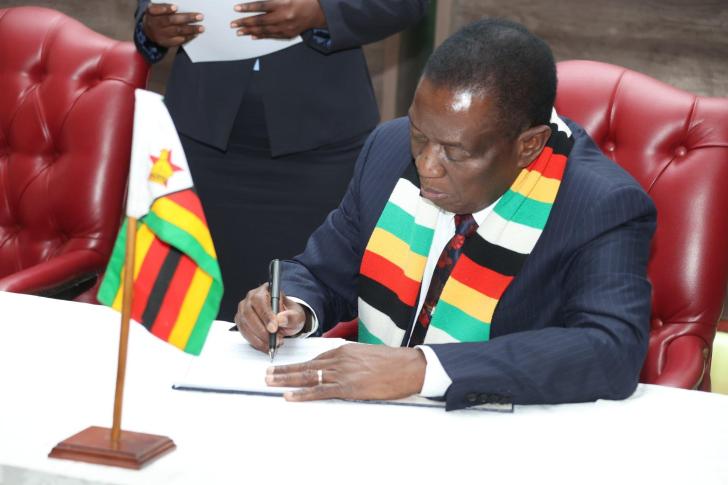
President Emmerson Mnangagwa is facing mounting pressure from constitutional lawyers and political opponents to suspend implementation of the recently enacted Constitutional Amendment Act No. 6 until the Constitutional Court rules on several legal challenges contesting its validity.
The amendments, signed into law earlier this month after being fast-tracked through Parliament, extend the terms of office for the president, Parliament and local authorities from five to seven years, alter the method of electing future presidents and introduce significant changes to Zimbabwe's electoral framework.
Among other changes, the legislation transfers responsibility for electoral boundary delimitation from the Zimbabwe Electoral Commission (ZEC) to a newly established Delimitation Commission, while extending the delimitation period from six to 18 months.
Despite multiple court applications challenging both the constitutionality of the amendments and the legislative process that produced them, critics say government institutions, including ZEC, have already begun implementing aspects of the new law.
Constitutional lawyer Lovemore Madhuku argued that although no court order currently prevents implementation, constitutionalism requires restraint while the country's highest court considers the legal challenges.
He said a president committed to the rule of law should voluntarily allow the Constitutional Court to determine the legality of the amendments before implementing them.
Madhuku maintained that constitutionalism extends beyond strict legal compliance and includes political morality and respect for democratic principles.
He also criticised ZEC's decision to begin implementing aspects of the amendments, describing the move as premature given the pending litigation, which he said could ultimately invalidate the entire Act.
Constitutional lawyer Douglas Coltart agreed that filing a court challenge does not automatically suspend the operation of legislation. However, he said a government acting in good faith should refrain from implementing contested provisions until the courts have ruled.
Coltart criticised ZEC for proceeding with preparations despite ongoing litigation, arguing that there is no immediate electoral necessity requiring implementation of the amendments.
He added that applicants could still seek interim court orders if government actions risk creating irreversible consequences before the Constitutional Court delivers its judgment.
Lawyer and former Finance Minister Tendai Biti, who has also filed a constitutional challenge, said some applications specifically seek interim relief preventing implementation of the amendments while the cases are heard.
Biti argued that although there is currently no legal barrier preventing Mnangagwa from implementing the law, principles of constitutional governance and political decency should persuade him to await the outcome of the court proceedings.
The government has defended the amendments as reforms designed to strengthen governance and improve institutional efficiency.
Meanwhile, Mnangagwa appeared to signal his intention to remain in office during an address to members of the Johane Marange Apostolic Church in Marange, where he said he would continue to govern "as long as" his health permits and declared he would continue to rule "until donkeys grow horns."
The remarks came weeks after he signed the controversial constitutional amendments into law and amid ongoing legal and political opposition to the reforms.
The amendments, signed into law earlier this month after being fast-tracked through Parliament, extend the terms of office for the president, Parliament and local authorities from five to seven years, alter the method of electing future presidents and introduce significant changes to Zimbabwe's electoral framework.
Among other changes, the legislation transfers responsibility for electoral boundary delimitation from the Zimbabwe Electoral Commission (ZEC) to a newly established Delimitation Commission, while extending the delimitation period from six to 18 months.
Despite multiple court applications challenging both the constitutionality of the amendments and the legislative process that produced them, critics say government institutions, including ZEC, have already begun implementing aspects of the new law.
Constitutional lawyer Lovemore Madhuku argued that although no court order currently prevents implementation, constitutionalism requires restraint while the country's highest court considers the legal challenges.
He said a president committed to the rule of law should voluntarily allow the Constitutional Court to determine the legality of the amendments before implementing them.
Madhuku maintained that constitutionalism extends beyond strict legal compliance and includes political morality and respect for democratic principles.
He also criticised ZEC's decision to begin implementing aspects of the amendments, describing the move as premature given the pending litigation, which he said could ultimately invalidate the entire Act.
Constitutional lawyer Douglas Coltart agreed that filing a court challenge does not automatically suspend the operation of legislation. However, he said a government acting in good faith should refrain from implementing contested provisions until the courts have ruled.
Coltart criticised ZEC for proceeding with preparations despite ongoing litigation, arguing that there is no immediate electoral necessity requiring implementation of the amendments.
He added that applicants could still seek interim court orders if government actions risk creating irreversible consequences before the Constitutional Court delivers its judgment.
Lawyer and former Finance Minister Tendai Biti, who has also filed a constitutional challenge, said some applications specifically seek interim relief preventing implementation of the amendments while the cases are heard.
Biti argued that although there is currently no legal barrier preventing Mnangagwa from implementing the law, principles of constitutional governance and political decency should persuade him to await the outcome of the court proceedings.
The government has defended the amendments as reforms designed to strengthen governance and improve institutional efficiency.
Meanwhile, Mnangagwa appeared to signal his intention to remain in office during an address to members of the Johane Marange Apostolic Church in Marange, where he said he would continue to govern "as long as" his health permits and declared he would continue to rule "until donkeys grow horns."
The remarks came weeks after he signed the controversial constitutional amendments into law and amid ongoing legal and political opposition to the reforms.
Source - The Standard
Join the discussion
Loading comments…


