News / National
Magaya to build Zimbabwe's biggest gold processing plant
02 Jul 2026 at 12:37hrs |
0 Views
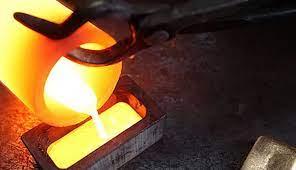
Magaya Mining is rolling out a nationwide network of mercury-free gold processing plants as it seeks to promote responsible artisanal mining while expanding its Gadzema operation into what it says will become Zimbabwe's largest gold recovery facility.
Chief executive officer Zweli Lunga said the company's strategy is aimed at eliminating mercury use in artisanal and small-scale mining, a sector that contributes more than 75 percent of the country's gold deliveries to Fidelity Gold Refinery but has long been associated with environmental degradation.
According to a 2025 study cited by the company, about 96 percent of artisanal mining sites continue to rely on mercury, releasing more than 24 tonnes of the toxic substance into the environment annually and contributing to water pollution, deforestation and biodiversity loss.
Lunga said Magaya's carbon-in-leach processing technology provides miners with an alternative method of recovering gold without the use of mercury.
"The current mining process, from a small-scale perspective, requires that when a miner mills his material, he recovers gravity gold. To amalgamate that, you use mercury," Lunga said during an environmental awareness programme at the company's Gadzema plant in Chegutu.
"But mercury is harmful. Its half-life is about 500 years. If it gets into your lungs, it can perforate them. Wherever there is mercury, nothing else can grow. It pollutes water bodies, and the water you drink can kill you very slowly and silently."
He said the company's processing plants purchase ore directly from artisanal miners, allowing gold to be recovered through carbon-in-leach technology rather than mercury amalgamation.
"When the miner produces his ore, he doesn't need to use mercury – our plants do the recovery. The gap we need to fill is ball milling. We buy the ore from the artisan, pay them upfront, and run it through ball mills. That way, we don't need mercury," he said.
Magaya Mining currently operates six processing plants across Zimbabwe and expects to commission a seventh facility in Bulawayo within weeks.
"We opened Kwekwe two months back – a 2,000-tonne-a-day plant. We're opening Bulawayo in the next week or two, another 1,000 tonnes a day. That will bring our total to about seven," Lunga said.
"Our vision is that wherever there is gold mining in Zimbabwe, our Magaya plants will recover gold for small-scale miners. That way, we can reduce mercury use to absolute zero."
The company plans further expansion into Shurugwi, Mhondoro and Gwanda next year as part of its strategy to establish processing facilities in every major gold-producing region.
Lunga said the existing Gadzema processing plant currently handles about 3,500 tonnes of ore per day, making it one of the country's largest facilities, while an ongoing expansion will add a further 2,000 tonnes of daily capacity.
"Because of demand, we've started to expand. New tanks are coming up, another 2,000-tonne plant. In total, we're looking at a combined capacity of over 5,500 tonnes per day," he said.
He attributed the expansion to growing demand from artisanal miners and expressed confidence that increased support, including access to finance and infrastructure, would enable the sector to significantly increase production.
Beyond processing, Lunga said the company had implemented security measures aimed at reducing violence commonly associated with artisanal mining.
He said access controls, fencing and security personnel had helped curb criminal activity, while formalising mining operations had encouraged miners to view their work as a sustainable business rather than a source of conflict.
"When I started here, guys were stabbing and killing each other, including in Chegutu town. This year alone, we've had zero mining-related criminality. People no longer have time to kill each other; everybody has time to work and make money," he said.
Speaking at the same event, Henrietta Rushwaya, president of the Zimbabwe Miners Federation, said artisanal and small-scale miners produced 36 tonnes of gold in 2025 and support an estimated 1.5 million livelihoods directly and indirectly.
She described access to mining claims as the sector's biggest challenge, noting that about 85 percent of more than one million artisanal miners remain unregistered.
Rushwaya said the government's proposed Mines and Minerals Bill seeks to modernise mining legislation by promoting formalisation, environmental protection and stronger community participation.
She also highlighted the federation's introduction of a biometric "Gold Card" identification system designed to integrate informal miners into a national database.
"We strive to increase productivity and contribute more meaningfully to the country's national development," she said.
Zimbabwe ratified the Minamata Convention on Mercury in 2019, committing to progressively eliminate mercury use in artisanal and small-scale gold mining.
Lunga said Magaya's expanding network of mercury-free processing plants supports that objective while providing miners with a commercially viable alternative.
"Eventually, there won't be any need for anyone to use mercury. Through our plants, we can reduce mercury use to absolute zero," he said.
Chief executive officer Zweli Lunga said the company's strategy is aimed at eliminating mercury use in artisanal and small-scale mining, a sector that contributes more than 75 percent of the country's gold deliveries to Fidelity Gold Refinery but has long been associated with environmental degradation.
According to a 2025 study cited by the company, about 96 percent of artisanal mining sites continue to rely on mercury, releasing more than 24 tonnes of the toxic substance into the environment annually and contributing to water pollution, deforestation and biodiversity loss.
Lunga said Magaya's carbon-in-leach processing technology provides miners with an alternative method of recovering gold without the use of mercury.
"The current mining process, from a small-scale perspective, requires that when a miner mills his material, he recovers gravity gold. To amalgamate that, you use mercury," Lunga said during an environmental awareness programme at the company's Gadzema plant in Chegutu.
"But mercury is harmful. Its half-life is about 500 years. If it gets into your lungs, it can perforate them. Wherever there is mercury, nothing else can grow. It pollutes water bodies, and the water you drink can kill you very slowly and silently."
He said the company's processing plants purchase ore directly from artisanal miners, allowing gold to be recovered through carbon-in-leach technology rather than mercury amalgamation.
"When the miner produces his ore, he doesn't need to use mercury – our plants do the recovery. The gap we need to fill is ball milling. We buy the ore from the artisan, pay them upfront, and run it through ball mills. That way, we don't need mercury," he said.
Magaya Mining currently operates six processing plants across Zimbabwe and expects to commission a seventh facility in Bulawayo within weeks.
"We opened Kwekwe two months back – a 2,000-tonne-a-day plant. We're opening Bulawayo in the next week or two, another 1,000 tonnes a day. That will bring our total to about seven," Lunga said.
"Our vision is that wherever there is gold mining in Zimbabwe, our Magaya plants will recover gold for small-scale miners. That way, we can reduce mercury use to absolute zero."
The company plans further expansion into Shurugwi, Mhondoro and Gwanda next year as part of its strategy to establish processing facilities in every major gold-producing region.
Lunga said the existing Gadzema processing plant currently handles about 3,500 tonnes of ore per day, making it one of the country's largest facilities, while an ongoing expansion will add a further 2,000 tonnes of daily capacity.
He attributed the expansion to growing demand from artisanal miners and expressed confidence that increased support, including access to finance and infrastructure, would enable the sector to significantly increase production.
Beyond processing, Lunga said the company had implemented security measures aimed at reducing violence commonly associated with artisanal mining.
He said access controls, fencing and security personnel had helped curb criminal activity, while formalising mining operations had encouraged miners to view their work as a sustainable business rather than a source of conflict.
"When I started here, guys were stabbing and killing each other, including in Chegutu town. This year alone, we've had zero mining-related criminality. People no longer have time to kill each other; everybody has time to work and make money," he said.
Speaking at the same event, Henrietta Rushwaya, president of the Zimbabwe Miners Federation, said artisanal and small-scale miners produced 36 tonnes of gold in 2025 and support an estimated 1.5 million livelihoods directly and indirectly.
She described access to mining claims as the sector's biggest challenge, noting that about 85 percent of more than one million artisanal miners remain unregistered.
Rushwaya said the government's proposed Mines and Minerals Bill seeks to modernise mining legislation by promoting formalisation, environmental protection and stronger community participation.
She also highlighted the federation's introduction of a biometric "Gold Card" identification system designed to integrate informal miners into a national database.
"We strive to increase productivity and contribute more meaningfully to the country's national development," she said.
Zimbabwe ratified the Minamata Convention on Mercury in 2019, committing to progressively eliminate mercury use in artisanal and small-scale gold mining.
Lunga said Magaya's expanding network of mercury-free processing plants supports that objective while providing miners with a commercially viable alternative.
"Eventually, there won't be any need for anyone to use mercury. Through our plants, we can reduce mercury use to absolute zero," he said.
Source - Mining Zimbabwe
Join the discussion
Loading comments…





