Opinion / Columnist
Former Air Zimbabwe employee casts aspersions on airline deal
28 Jul 2026 at 11:12hrs |
0 Views
I spent fourteen years at Air Zimbabwe. I worked there when we still had a maintenance hangar that functioned, when our crews trained at Boeing in Seattle, when we flew six times a week to London and nobody questioned whether our aircraft would make it. So when I read Mr. Brighton Musonza's defence of the airline's wet-lease arrangement with Plus Ultra Líneas Aereas - and the accompanying claim that critics are simply "misinformed" - I felt compelled to speak. Not as a pundit. As someone who watched this airline be dismantled from the inside.
Mr. Musonza's article, published by Tea pot country News, makes one argument and hides another. Yes, aircraft leasing is normal. Yes, Ethiopian Airlines, Qatar Airways and British Airways lease portions of their fleets. But here is what the article deliberately omits: Air Zimbabwe is not leasing by choice. It is leasing because it is banned from operating its own aircraft in European airspace.
In 2017, the European Union placed Air Zimbabwe on its Air Safety List. The airline was found to have serious safety oversight deficiencies. It remains on that list to this day. It is also prohibited from operating commercial services to, from and within the United Kingdom.
This is not a commercial strategy. It is a regulatory surrender. When Mr. Musonza compares Air Zimbabwe to Qatar Airways — which leases aircraft while simultaneously operating one of the youngest and most technologically advanced owned fleets on earth — he is either ignorant of aviation or he is hoping his readers are.
The question is not "Is leasing normal?" The question is: "Why can't Air Zimbabwe fly its own metal to London after nearly four decades of serving that route?"
The article describes Plus Ultra as a "Spanish carrier" as if it were Iberia. Let me tell you who Plus Ultra actually is.
In December 2025 — just months before this wet-lease began — Spanish police raided Plus Ultra's Madrid headquarters and arrested its president, Julio Martínez, and its CEO, Roberto Roselli, on suspicion of money laundering linked to Venezuela's illicit gold trade and the CLAP food-box programme. Prosecutors allege the airline used €53 million in Spanish COVID bailout funds to launder embezzled Venezuelan public money.
This is not a reputable partner. This is an airline whose leadership is currently facing criminal charges.
And the passenger experience? Plus Ultra holds a 1.5-star rating on Trustpilot. Reviews describe 7–8 hour delays with no compensation. Passengers report pilots flying "in a more aggressive manner than I have ever seen." One traveller wrote they "simply did not feel safe on the plane." Another described luggage being left behind because the aircraft was "too heavy."
This is the airline Mr. Musonza compares to Lufthansa.
I was there in December 2011 when Air Zimbabwe's Boeing 767 was impounded at Gatwick over a 1.2 million debt to spare parts supplier American General Supplies. I remember the shame of it — our national flag carrier's aircraft seized on foreign soil, passengers sleeping in the terminal, the plane grounded for days with "technical faults" after it was finally released. The route was abandoned two months later.
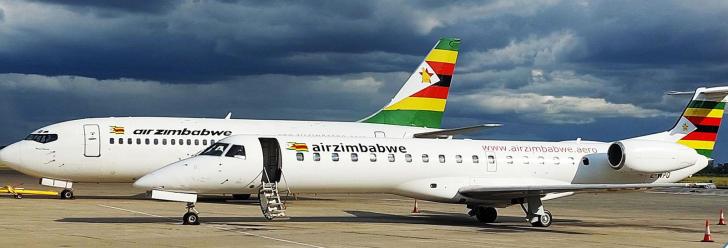
I watched as the airline that once operated Boeing 707s, 737s, and a proud long-haul fleet was reduced to its current state: two active aircraft — a Boeing 737-200 (a type first flown in 1967) and an ATR 42-500 — serving four destinations.
This is not a "recovering airline" choosing a prudent leasing strategy. This is an airline that has been stripped of its operational capability through decades of mismanagement, political interference, and debt. The problem is not a lack of foreign currency to purchase aircraft. The problem is that no lessor, no manufacturer, and no regulator trusts Air Zimbabwe anymore.
Mr. Musonza is described as a "renowned economist and political commentator." I have searched for his credentials in aviation finance, fleet planning, or airline operations. I cannot find them. He appears to be a political commentator — not an aviation economist.
His claim that the "industry benchmark is a 60/40 percent hybrid ownership model" is vague and unsourced. But even if we accept it, he misses the point entirely. Ethiopian Airlines may lease 40% of its fleet, but it owns and operates the remaining 60% under its own air operator certificate, with its own crews, its own maintenance regime, and its own safety record. Air Zimbabwe is not leasing a portion of a thriving fleet. It is leasing 100% of its London capacity because it is legally prohibited from using its own.
That is not a hybrid model. That is a hostage situation.
What does this wet-lease actually cost? The article does not say. We do not know what Zimbabwean taxpayers are paying Plus Ultra for this 13-month arrangement. We do not know whether the deal was tendered competitively. We do not know why an airline under criminal investigation was selected over other wet-lease providers.
What we do know is that Air Zimbabwe's debts have been estimated at over 300 million. We know the airline has been stripped of its international credibility. And we know that every time it has tried to return to London, it has done so not on the strength of its own recovery, but by borrowing someone else's wings.
The reinstatement of the Harare–London route is welcome. Diaspora travellers and businesspeople deserve direct links. Fresh produce exporters need that cargo capacity. No one disputes the route's importance.
But let us be honest about what this is. It is not a sign of recovery. It is a sign that after fifteen years of decline, Air Zimbabwe still cannot meet the basic safety and financial standards required to operate its own aircraft to Europe. And rather than fix the underlying problems — the maintenance culture, the safety oversight, the debt, the governance — it has found a loophole.
A wet-lease is legal. But when your "partner" is an airline whose executives were arrested for money laundering, whose passengers fear for their safety, and whose business model appears to depend on government bailouts and dubious foreign contracts, you are not making a commercial decision. You are scraping the bottom of the barrel.
I loved Air Zimbabwe. I gave it fourteen years of my working life. I remember when we were a real airline. And that is precisely why I cannot stay silent while someone who never worked a day in aviation tells the public that this is "the universal benchmark."
It is not. It is a national embarrassment dressed up in press-release language.
The record does not need to be "set straight" by Mr. Musonza. The record is already straight. And it is damning.
Mr. Musonza's article, published by Tea pot country News, makes one argument and hides another. Yes, aircraft leasing is normal. Yes, Ethiopian Airlines, Qatar Airways and British Airways lease portions of their fleets. But here is what the article deliberately omits: Air Zimbabwe is not leasing by choice. It is leasing because it is banned from operating its own aircraft in European airspace.
In 2017, the European Union placed Air Zimbabwe on its Air Safety List. The airline was found to have serious safety oversight deficiencies. It remains on that list to this day. It is also prohibited from operating commercial services to, from and within the United Kingdom.
This is not a commercial strategy. It is a regulatory surrender. When Mr. Musonza compares Air Zimbabwe to Qatar Airways — which leases aircraft while simultaneously operating one of the youngest and most technologically advanced owned fleets on earth — he is either ignorant of aviation or he is hoping his readers are.
The question is not "Is leasing normal?" The question is: "Why can't Air Zimbabwe fly its own metal to London after nearly four decades of serving that route?"
The article describes Plus Ultra as a "Spanish carrier" as if it were Iberia. Let me tell you who Plus Ultra actually is.
In December 2025 — just months before this wet-lease began — Spanish police raided Plus Ultra's Madrid headquarters and arrested its president, Julio Martínez, and its CEO, Roberto Roselli, on suspicion of money laundering linked to Venezuela's illicit gold trade and the CLAP food-box programme. Prosecutors allege the airline used €53 million in Spanish COVID bailout funds to launder embezzled Venezuelan public money.
This is not a reputable partner. This is an airline whose leadership is currently facing criminal charges.
And the passenger experience? Plus Ultra holds a 1.5-star rating on Trustpilot. Reviews describe 7–8 hour delays with no compensation. Passengers report pilots flying "in a more aggressive manner than I have ever seen." One traveller wrote they "simply did not feel safe on the plane." Another described luggage being left behind because the aircraft was "too heavy."
This is the airline Mr. Musonza compares to Lufthansa.
I was there in December 2011 when Air Zimbabwe's Boeing 767 was impounded at Gatwick over a 1.2 million debt to spare parts supplier American General Supplies. I remember the shame of it — our national flag carrier's aircraft seized on foreign soil, passengers sleeping in the terminal, the plane grounded for days with "technical faults" after it was finally released. The route was abandoned two months later.
I watched as the airline that once operated Boeing 707s, 737s, and a proud long-haul fleet was reduced to its current state: two active aircraft — a Boeing 737-200 (a type first flown in 1967) and an ATR 42-500 — serving four destinations.
Mr. Musonza is described as a "renowned economist and political commentator." I have searched for his credentials in aviation finance, fleet planning, or airline operations. I cannot find them. He appears to be a political commentator — not an aviation economist.
His claim that the "industry benchmark is a 60/40 percent hybrid ownership model" is vague and unsourced. But even if we accept it, he misses the point entirely. Ethiopian Airlines may lease 40% of its fleet, but it owns and operates the remaining 60% under its own air operator certificate, with its own crews, its own maintenance regime, and its own safety record. Air Zimbabwe is not leasing a portion of a thriving fleet. It is leasing 100% of its London capacity because it is legally prohibited from using its own.
That is not a hybrid model. That is a hostage situation.
What does this wet-lease actually cost? The article does not say. We do not know what Zimbabwean taxpayers are paying Plus Ultra for this 13-month arrangement. We do not know whether the deal was tendered competitively. We do not know why an airline under criminal investigation was selected over other wet-lease providers.
What we do know is that Air Zimbabwe's debts have been estimated at over 300 million. We know the airline has been stripped of its international credibility. And we know that every time it has tried to return to London, it has done so not on the strength of its own recovery, but by borrowing someone else's wings.
The reinstatement of the Harare–London route is welcome. Diaspora travellers and businesspeople deserve direct links. Fresh produce exporters need that cargo capacity. No one disputes the route's importance.
But let us be honest about what this is. It is not a sign of recovery. It is a sign that after fifteen years of decline, Air Zimbabwe still cannot meet the basic safety and financial standards required to operate its own aircraft to Europe. And rather than fix the underlying problems — the maintenance culture, the safety oversight, the debt, the governance — it has found a loophole.
A wet-lease is legal. But when your "partner" is an airline whose executives were arrested for money laundering, whose passengers fear for their safety, and whose business model appears to depend on government bailouts and dubious foreign contracts, you are not making a commercial decision. You are scraping the bottom of the barrel.
I loved Air Zimbabwe. I gave it fourteen years of my working life. I remember when we were a real airline. And that is precisely why I cannot stay silent while someone who never worked a day in aviation tells the public that this is "the universal benchmark."
It is not. It is a national embarrassment dressed up in press-release language.
The record does not need to be "set straight" by Mr. Musonza. The record is already straight. And it is damning.
Source - Mirror
All articles and letters published on Bulawayo24 have been independently written by members of Bulawayo24's community. The views of users published on Bulawayo24 are therefore their own and do not necessarily represent the views of Bulawayo24. Bulawayo24 editors also reserve the right to edit or delete any and all comments received.
Join the discussion
Loading comments…


