News / National
Zimbabwe police faces severe staffing shortage
10 Apr 2026 at 11:26hrs |
0 Views
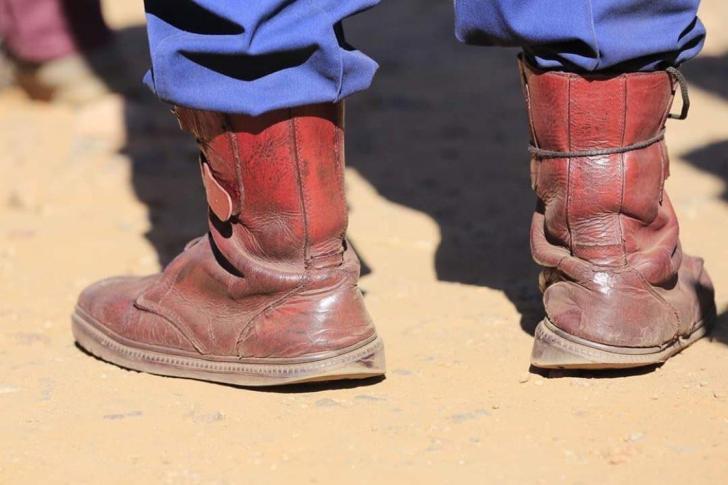
The Zimbabwe Republic Police (ZRP) is grappling with a significant manpower shortage, operating with only 14 000 officers against an ideal establishment of 50 000, government has revealed.
The shortfall has raised concerns over the force's ability to effectively respond to crime, maintain public order, and provide adequate nationwide coverage amid rising security demands.
Home Affairs and Cultural Heritage Minister Kazembe Kazembe told Parliament that the current staffing level translates to one police officer serving approximately 1 143 citizens, based on Zimbabwe's population of about 16 million.
He said government's long-term target is to expand the force to 50 000 officers to better align with population needs and international policing benchmarks.
"At the moment, we have 14 000 police officers," Kazembe said, adding that the shortfall reflects both recruitment constraints and attrition through resignations, retirements, and career changes.
He noted that the recruitment pipeline is limited, with about 1 000 to 2 000 recruits trained annually, making it difficult to offset losses and rapidly scale up the force.
Kazembe also said expansion efforts depend on approval from Treasury and the Public Service Commission, which control hiring and funding allocations.
International standards, including guidance often referenced by the United Nations, suggest a minimum ratio of roughly one officer per 450 citizens to ensure effective policing. On that basis, Zimbabwe would require about 35 000 officers to meet baseline coverage.
However, experts note that even the government's 50 000 target—equivalent to roughly one officer per 320 citizens—would still be a gradual improvement rather than an oversupply, given regional comparisons and rising crime challenges.
Across Africa, police-to-population ratios vary widely, with many countries operating below recommended thresholds. Even more resourced systems, such as South Africa, face strain despite a comparatively stronger ratio.
Analysts warn that without increased investment in recruitment, training capacity, and retention strategies, the staffing gap could continue to undermine public safety and stretch policing resources further in the coming years.
The shortfall has raised concerns over the force's ability to effectively respond to crime, maintain public order, and provide adequate nationwide coverage amid rising security demands.
Home Affairs and Cultural Heritage Minister Kazembe Kazembe told Parliament that the current staffing level translates to one police officer serving approximately 1 143 citizens, based on Zimbabwe's population of about 16 million.
He said government's long-term target is to expand the force to 50 000 officers to better align with population needs and international policing benchmarks.
"At the moment, we have 14 000 police officers," Kazembe said, adding that the shortfall reflects both recruitment constraints and attrition through resignations, retirements, and career changes.
Kazembe also said expansion efforts depend on approval from Treasury and the Public Service Commission, which control hiring and funding allocations.
International standards, including guidance often referenced by the United Nations, suggest a minimum ratio of roughly one officer per 450 citizens to ensure effective policing. On that basis, Zimbabwe would require about 35 000 officers to meet baseline coverage.
However, experts note that even the government's 50 000 target—equivalent to roughly one officer per 320 citizens—would still be a gradual improvement rather than an oversupply, given regional comparisons and rising crime challenges.
Across Africa, police-to-population ratios vary widely, with many countries operating below recommended thresholds. Even more resourced systems, such as South Africa, face strain despite a comparatively stronger ratio.
Analysts warn that without increased investment in recruitment, training capacity, and retention strategies, the staffing gap could continue to undermine public safety and stretch policing resources further in the coming years.
Source - newsday
Join the discussion
Loading comments…


