News / National
'Mthuli Ncube's policies doing little to eradicate poverty'
18 Dec 2025 at 13:23hrs |
0 Views
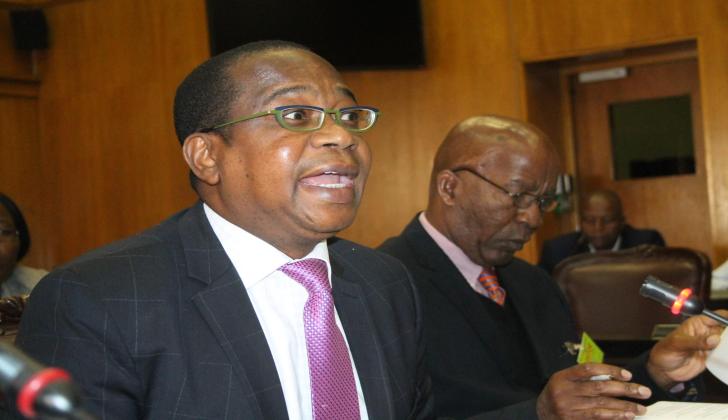
The Labour and Economic Development Research Institute of Zimbabwe (LEDRIZ) has delivered a scathing assessment of Finance Minister Mthuli Ncube's economic policies, arguing that they have consistently failed to lift ordinary Zimbabweans out of poverty despite repeated budgetary interventions.
The criticism follows the presentation of the ZWG312.6 billion 2026 National Budget, which Treasury said was designed to balance competing national priorities within a constrained fiscal environment marked by limited resources and overwhelming demands from government ministries.
While Ncube has described the 2026 budget as a reasonable balancing act, LEDRIZ director Dr Godfrey Kanyenze on Tuesday questioned both its orientation and its likely impact on the livelihoods of struggling citizens, saying it reflects a continuation of policy choices that prioritise macroeconomic indicators over social outcomes.
According to Kanyenze, the latest budget remains anchored on traditional measures such as gross domestic product growth, budget deficits, inflation, the current account position and debt sustainability, all of which are rooted in a conventional trickle-down approach that treats social objectives as secondary to stability targets.
"While macroeconomic and price stability are important, lessons from Structural Adjustment Programmes implemented across the world in the 1980s and 1990s show that macroeconomic stabilisation was often achieved at the expense of sustained economic growth, employment creation and poverty reduction — the so-called stabilisation trap," Kanyenze said.
"These studies highlight how conventional macroeconomic policies confuse means with ends. Macroeconomic stability is a means, not an end in itself."
He said the 2026 budget, which marks the beginning of the National Development Strategy 2 (NDS2), should represent a clear shift away from narrow macroeconomic benchmarks towards indicators that measure real social and economic outcomes.
Kanyenze argued that Treasury should incorporate metrics such as employment and unemployment levels, inequality, poverty rates and broader human development indicators to properly assess whether economic policy is improving people's lives.
He further noted that although the first National Development Strategy (NDS1) recorded episodes of strong economic growth, this growth failed to translate into meaningful job creation, leaving the quality of expansion largely non-inclusive.
Citing data from the Zimbabwe National Statistics Agency's Labour Force Survey, Kanyenze said unemployment rose from 14 percent in 2019 to 19.1 percent by the fourth quarter of 2022, before increasing further to 19.3 percent in the first quarter of 2023, 19.7 percent in the second quarter, 21 percent in the third quarter and 21.8 percent by the third quarter of 2024.
He added that extreme poverty — defined as the proportion of people unable to afford a food basket that meets minimum daily caloric requirements — worsened sharply over the past decade, rising from 23 percent in 2011 to a peak of 49 percent in 2020 following the outbreak of COVID-19.
Although extreme poverty levels eased to about 42 percent in 2023 due to the resumption of economic activity and a favourable agricultural season, Kanyenze said broader poverty indicators remain alarmingly high. The international poverty rate, measured at US$3 a day in 2021 purchasing power parity terms, stood at 41.4 percent and is projected at 44.5 percent in 2026.
The veteran economist also questioned why Treasury failed to reflect on the 760 000 job creation target set under NDS1, arguing that it should have been used as a benchmark to assess the overall effectiveness of government policy.
LEDRIZ's critique adds to growing debate over whether Zimbabwe's economic strategy, while focused on stabilisation, is delivering tangible benefits for the majority of citizens facing rising unemployment, persistent poverty and declining living standards.
The criticism follows the presentation of the ZWG312.6 billion 2026 National Budget, which Treasury said was designed to balance competing national priorities within a constrained fiscal environment marked by limited resources and overwhelming demands from government ministries.
While Ncube has described the 2026 budget as a reasonable balancing act, LEDRIZ director Dr Godfrey Kanyenze on Tuesday questioned both its orientation and its likely impact on the livelihoods of struggling citizens, saying it reflects a continuation of policy choices that prioritise macroeconomic indicators over social outcomes.
According to Kanyenze, the latest budget remains anchored on traditional measures such as gross domestic product growth, budget deficits, inflation, the current account position and debt sustainability, all of which are rooted in a conventional trickle-down approach that treats social objectives as secondary to stability targets.
"While macroeconomic and price stability are important, lessons from Structural Adjustment Programmes implemented across the world in the 1980s and 1990s show that macroeconomic stabilisation was often achieved at the expense of sustained economic growth, employment creation and poverty reduction — the so-called stabilisation trap," Kanyenze said.
"These studies highlight how conventional macroeconomic policies confuse means with ends. Macroeconomic stability is a means, not an end in itself."
He said the 2026 budget, which marks the beginning of the National Development Strategy 2 (NDS2), should represent a clear shift away from narrow macroeconomic benchmarks towards indicators that measure real social and economic outcomes.
Kanyenze argued that Treasury should incorporate metrics such as employment and unemployment levels, inequality, poverty rates and broader human development indicators to properly assess whether economic policy is improving people's lives.
He further noted that although the first National Development Strategy (NDS1) recorded episodes of strong economic growth, this growth failed to translate into meaningful job creation, leaving the quality of expansion largely non-inclusive.
Citing data from the Zimbabwe National Statistics Agency's Labour Force Survey, Kanyenze said unemployment rose from 14 percent in 2019 to 19.1 percent by the fourth quarter of 2022, before increasing further to 19.3 percent in the first quarter of 2023, 19.7 percent in the second quarter, 21 percent in the third quarter and 21.8 percent by the third quarter of 2024.
He added that extreme poverty — defined as the proportion of people unable to afford a food basket that meets minimum daily caloric requirements — worsened sharply over the past decade, rising from 23 percent in 2011 to a peak of 49 percent in 2020 following the outbreak of COVID-19.
Although extreme poverty levels eased to about 42 percent in 2023 due to the resumption of economic activity and a favourable agricultural season, Kanyenze said broader poverty indicators remain alarmingly high. The international poverty rate, measured at US$3 a day in 2021 purchasing power parity terms, stood at 41.4 percent and is projected at 44.5 percent in 2026.
The veteran economist also questioned why Treasury failed to reflect on the 760 000 job creation target set under NDS1, arguing that it should have been used as a benchmark to assess the overall effectiveness of government policy.
LEDRIZ's critique adds to growing debate over whether Zimbabwe's economic strategy, while focused on stabilisation, is delivering tangible benefits for the majority of citizens facing rising unemployment, persistent poverty and declining living standards.
Source - Newsday
Join the discussion
Loading comments…





