News / National
Kariba dam rehab project nears completion at 94%
11 May 2026 at 14:26hrs |
0 Views
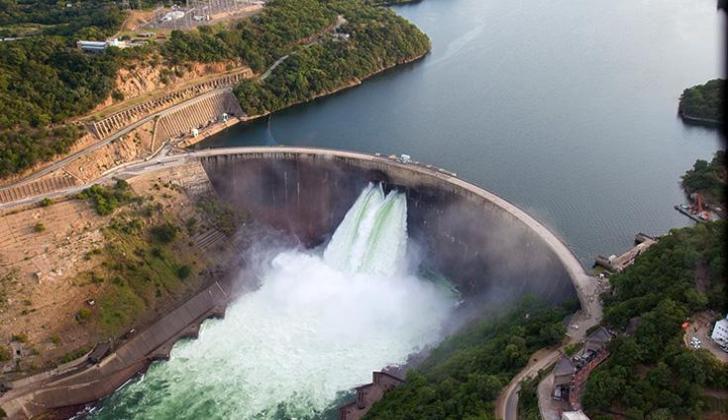
The US$294 million Kariba Dam Rehabilitation Project, aimed at securing one of Southern Africa's most critical hydro-power assets, is now approximately 94 percent complete, according to the Zambezi River Authority.
In its latest update, the authority said the project remains on track for full completion by the end of the fourth quarter of 2026, marking a major milestone in efforts to safeguard long-term electricity generation for Zimbabwe and Zambia.
The rehabilitation programme is a joint initiative between the two countries, implemented through the Zambezi River Authority, in response to ageing infrastructure and increasing regional demand for reliable power supply.
A key focus of the project has been the refurbishment of the dam's spillway system, particularly the six sluice gates, which had deteriorated over decades of operation due to structural wear and chemical degradation.
ZRA Chief Executive Engineer Munyaradzi Munodawafa said natural processes, including Alkali-Aggregate Reaction (AAR) and concrete ageing, had significantly affected the performance of the gates.
AAR is a slow chemical reaction between cement and certain minerals in aggregates, resulting in expansion, cracking and loss of structural integrity over time.
"The refurbishment was, therefore, intended to restore their full operability and reliability," Munodawafa said.
Phase One of the spillway rehabilitation, launched in May 2019 and implemented by GE Hydro France in partnership with Freyssinet International, is now 99 percent complete.
That phase involved major works including hydro-demolition, concrete repairs, installation of embedded components, and commissioning of rehabilitated sluices. Remaining tasks include commissioning of the gantry crane and final site demobilisation.
Attention has now shifted to Phase Two, which began in August 2024 and is about 70 percent complete. This phase focuses on electro-mechanical upgrades, including the installation of new hoisting systems for all six sluice gates.
The works are being carried out by the Morris and Stub Engineers Joint Venture, with installation of hoisting systems for sluices 1, 2, 5 and 6 currently underway. The design and manufacture of all six systems were completed in 2025, with installation beginning in December the same year.
Beyond spillway works, the rehabilitation programme also includes the completed plunge pool reshaping project, commissioned in September 2024. The technically complex operation involved underwater blasting and excavation to reduce erosion risks at the base of the dam wall.
The broader Kariba Dam Rehabilitation Project also incorporates institutional strengthening measures, including improved dam safety monitoring, governance reforms, and technical capacity building within the Zambezi River Authority.
Funding has been mobilised from international partners including the African Development Bank, the World Bank, the European Union, and the Government of Sweden, alongside counterpart contributions from Zimbabwe and Zambia.
Authorities say the rehabilitation is essential to reduce risks of uncontrolled water releases that could trigger downstream flooding, infrastructure damage, and loss of life.
The project also includes an Early Warning System designed to improve communication with downstream communities during scheduled or emergency water discharges from the Kariba Reservoir.
Hydropower from Kariba remains a cornerstone of electricity generation, supporting industrial activity, economic productivity and regional development across both Zimbabwe and Zambia.
In its latest update, the authority said the project remains on track for full completion by the end of the fourth quarter of 2026, marking a major milestone in efforts to safeguard long-term electricity generation for Zimbabwe and Zambia.
The rehabilitation programme is a joint initiative between the two countries, implemented through the Zambezi River Authority, in response to ageing infrastructure and increasing regional demand for reliable power supply.
A key focus of the project has been the refurbishment of the dam's spillway system, particularly the six sluice gates, which had deteriorated over decades of operation due to structural wear and chemical degradation.
ZRA Chief Executive Engineer Munyaradzi Munodawafa said natural processes, including Alkali-Aggregate Reaction (AAR) and concrete ageing, had significantly affected the performance of the gates.
AAR is a slow chemical reaction between cement and certain minerals in aggregates, resulting in expansion, cracking and loss of structural integrity over time.
"The refurbishment was, therefore, intended to restore their full operability and reliability," Munodawafa said.
Phase One of the spillway rehabilitation, launched in May 2019 and implemented by GE Hydro France in partnership with Freyssinet International, is now 99 percent complete.
That phase involved major works including hydro-demolition, concrete repairs, installation of embedded components, and commissioning of rehabilitated sluices. Remaining tasks include commissioning of the gantry crane and final site demobilisation.
Attention has now shifted to Phase Two, which began in August 2024 and is about 70 percent complete. This phase focuses on electro-mechanical upgrades, including the installation of new hoisting systems for all six sluice gates.
The works are being carried out by the Morris and Stub Engineers Joint Venture, with installation of hoisting systems for sluices 1, 2, 5 and 6 currently underway. The design and manufacture of all six systems were completed in 2025, with installation beginning in December the same year.
Beyond spillway works, the rehabilitation programme also includes the completed plunge pool reshaping project, commissioned in September 2024. The technically complex operation involved underwater blasting and excavation to reduce erosion risks at the base of the dam wall.
The broader Kariba Dam Rehabilitation Project also incorporates institutional strengthening measures, including improved dam safety monitoring, governance reforms, and technical capacity building within the Zambezi River Authority.
Funding has been mobilised from international partners including the African Development Bank, the World Bank, the European Union, and the Government of Sweden, alongside counterpart contributions from Zimbabwe and Zambia.
Authorities say the rehabilitation is essential to reduce risks of uncontrolled water releases that could trigger downstream flooding, infrastructure damage, and loss of life.
The project also includes an Early Warning System designed to improve communication with downstream communities during scheduled or emergency water discharges from the Kariba Reservoir.
Hydropower from Kariba remains a cornerstone of electricity generation, supporting industrial activity, economic productivity and regional development across both Zimbabwe and Zambia.
Source - The Herald
Join the discussion
Loading comments…




