News / National
IMF approves first review of Zimbabwe's staff-monitored programme
28 Jul 2026 at 14:11hrs |
0 Views
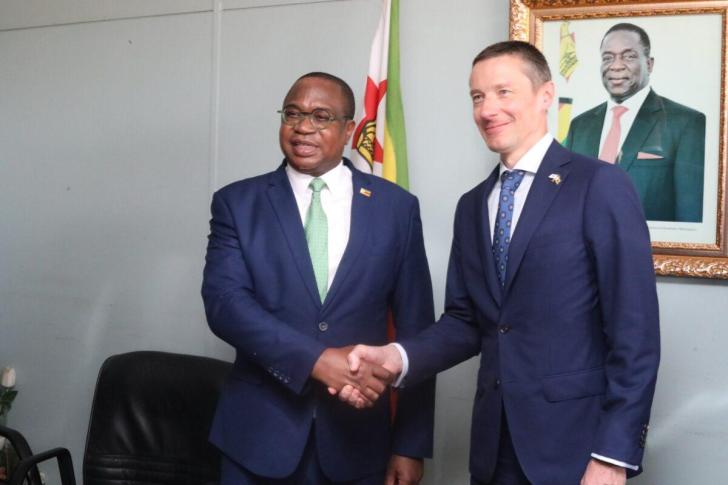
The International Monetary Fund (IMF) has approved the completion of the first review of Zimbabwe's 10-month Staff-Monitored Programme (SMP), describing the milestone as an important step in consolidating macroeconomic stability and advancing the country's efforts to clear debt arrears, restructure its debt and re-engage with the international community.
In a statement, the IMF said Zimbabwe's economy had remained resilient despite a challenging global environment, underpinned by strong agricultural output, robust mining activity and favourable international gold prices.
The Fund said economic growth reached 8.3 percent in 2025 and continued into early 2026, while inflation remained low due to tight monetary policy and relative stability in the exchange rate.
The IMF projects Zimbabwe's economy to grow by 5 percent in 2026, with medium-term growth averaging 4.2 percent. Inflation is expected to remain in single digits, supported by continued prudent fiscal and monetary policies.
Although the country's current account surplus is projected to narrow, the IMF said it is expected to remain strong.
However, the Fund cautioned that the outlook faces downside risks, including the possibility of a major El Niño weather event and renewed conflict in the Middle East, both of which could affect economic performance.
The IMF said Zimbabwe recorded strong implementation of its reform programme, meeting all end-March quantitative targets, including those relating to the primary budget balance, net international reserves, Reserve Bank of Zimbabwe lending to the non-financial public sector, external borrowing and monetary base growth.
Most indicative targets were also achieved, although the target on protected social and priority spending was missed.
The Fund noted that both the end-March and end-June structural benchmarks had been completed, with authorities continuing to make progress on subsequent reform commitments.
On fiscal policy, the IMF said Zimbabwe's primary budget surplus through the end of March exceeded expectations, supported by stronger-than-anticipated revenue collection.
The programme supports the Government's commitment to operate within the approved 2026 National Budget while saving additional revenues to create buffers for potential food security requirements in 2027.
The IMF also welcomed measures aimed at containing fiscal risks, including tighter controls on gold delivery incentives, adopting a rules-based approach to early debt redemptions and strengthening safeguards for clearing domestic arrears.
It said improvements in budget execution, expenditure controls, public financial management and domestic arrears clearance would be essential to maintaining fiscal credibility and preventing the accumulation of new arrears.
The Fund commended the Reserve Bank of Zimbabwe for maintaining a tight monetary policy stance that has helped contain inflation and ease pressure on the foreign exchange market.
It said this policy stance should continue until inflation expectations are firmly anchored and confidence in the Zimbabwe Gold (ZiG) currency strengthens.
The IMF also welcomed the operationalisation of the ZiG-denominated term deposit facility, describing it as an important step towards greater use of market-based monetary policy instruments.
According to the Fund, gradually reducing reliance on non-negotiable certificates of deposit would improve monetary policy transmission and support the development of Zimbabwe's domestic money market.
It further welcomed the authorities' plans to develop a comprehensive strategy to further liberalise the foreign exchange market and reform the foreign exchange intervention framework.
The IMF said structural reforms remain central to the programme, particularly efforts to strengthen social protection, improve public financial management, enhance governance and better manage fiscal risks.
While acknowledging progress, it said the missed target on protected social and priority spending highlighted the need to improve budget execution and ensure vulnerable groups receive timely support.
The Fund added that continued implementation of the Staff-Monitored Programme, together with ongoing efforts to reconcile debt data and develop a credible arrears clearance and debt resolution strategy, would strengthen Zimbabwe's engagement with international creditors and development partners as the country pursues the next phase of its re-engagement process.
In a statement, the IMF said Zimbabwe's economy had remained resilient despite a challenging global environment, underpinned by strong agricultural output, robust mining activity and favourable international gold prices.
The Fund said economic growth reached 8.3 percent in 2025 and continued into early 2026, while inflation remained low due to tight monetary policy and relative stability in the exchange rate.
The IMF projects Zimbabwe's economy to grow by 5 percent in 2026, with medium-term growth averaging 4.2 percent. Inflation is expected to remain in single digits, supported by continued prudent fiscal and monetary policies.
Although the country's current account surplus is projected to narrow, the IMF said it is expected to remain strong.
However, the Fund cautioned that the outlook faces downside risks, including the possibility of a major El Niño weather event and renewed conflict in the Middle East, both of which could affect economic performance.
The IMF said Zimbabwe recorded strong implementation of its reform programme, meeting all end-March quantitative targets, including those relating to the primary budget balance, net international reserves, Reserve Bank of Zimbabwe lending to the non-financial public sector, external borrowing and monetary base growth.
Most indicative targets were also achieved, although the target on protected social and priority spending was missed.
The Fund noted that both the end-March and end-June structural benchmarks had been completed, with authorities continuing to make progress on subsequent reform commitments.
On fiscal policy, the IMF said Zimbabwe's primary budget surplus through the end of March exceeded expectations, supported by stronger-than-anticipated revenue collection.
The IMF also welcomed measures aimed at containing fiscal risks, including tighter controls on gold delivery incentives, adopting a rules-based approach to early debt redemptions and strengthening safeguards for clearing domestic arrears.
It said improvements in budget execution, expenditure controls, public financial management and domestic arrears clearance would be essential to maintaining fiscal credibility and preventing the accumulation of new arrears.
The Fund commended the Reserve Bank of Zimbabwe for maintaining a tight monetary policy stance that has helped contain inflation and ease pressure on the foreign exchange market.
It said this policy stance should continue until inflation expectations are firmly anchored and confidence in the Zimbabwe Gold (ZiG) currency strengthens.
The IMF also welcomed the operationalisation of the ZiG-denominated term deposit facility, describing it as an important step towards greater use of market-based monetary policy instruments.
According to the Fund, gradually reducing reliance on non-negotiable certificates of deposit would improve monetary policy transmission and support the development of Zimbabwe's domestic money market.
It further welcomed the authorities' plans to develop a comprehensive strategy to further liberalise the foreign exchange market and reform the foreign exchange intervention framework.
The IMF said structural reforms remain central to the programme, particularly efforts to strengthen social protection, improve public financial management, enhance governance and better manage fiscal risks.
While acknowledging progress, it said the missed target on protected social and priority spending highlighted the need to improve budget execution and ensure vulnerable groups receive timely support.
The Fund added that continued implementation of the Staff-Monitored Programme, together with ongoing efforts to reconcile debt data and develop a credible arrears clearance and debt resolution strategy, would strengthen Zimbabwe's engagement with international creditors and development partners as the country pursues the next phase of its re-engagement process.
Source - businessdaily.co.zw
Join the discussion
Loading comments…



